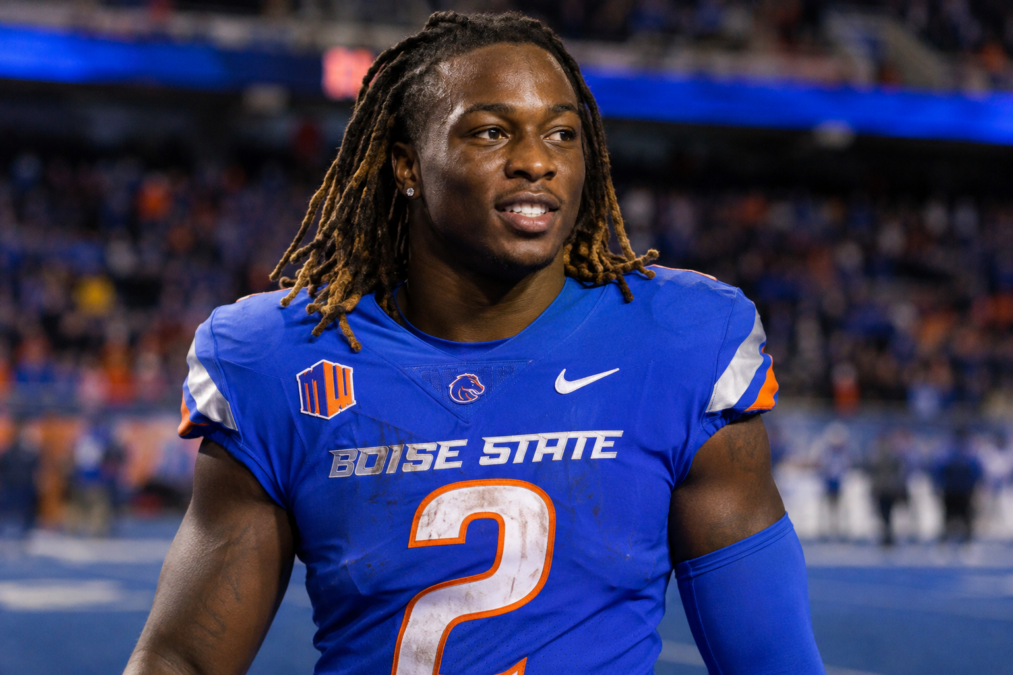
Ashton Jeanty stance has become one of the most interesting and recognizable sights in modern football. Before the ball is snapped, Jeanty has often stood upright in the backfield while many other running backs bend their knees and prepare in a lower athletic position. At first glance, the posture may look unusual. However, football is full of different styles, and Jeanty’s stance shows that comfort, confidence, and performance can sometimes matter more than simply looking like everyone else.
Ashton Jeanty became a major football star during his time at Boise State and later entered the NFL as a highly regarded running back. His powerful running, quick feet, balance, vision, and ability to break tackles made him one of the most exciting players to watch. Yet, alongside his impressive production, fans and coaches also noticed something else: his unusual way of standing before the snap.
The story of his stance is more than a conversation about body position. It is also a story about personal comfort, coaching, adjustment, and learning. Jeanty’s experience shows an important lesson for athletes of all ages. A player can have a unique style, but they must also be willing to listen, improve, and adapt when the situation changes.
This article explains the famous ashton jeanty stance, why it became popular, what Jeanty has said about it, why coaches discussed changing it, and what football fans can learn from the debate.
What Is the Ashton Jeanty Stance?
The ashton jeanty stance usually refers to his unusual upright position in the offensive backfield before the football is snapped. While many running backs begin with their knees bent, their bodies lowered, and their weight ready to move in any direction, Jeanty became known for standing much straighter.
His posture looked relaxed and almost casual. His arms could hang naturally at his sides while he watched the defense. Then, once the play began, he could quickly transform from a calm figure into an explosive runner. That contrast caught the attention of football fans.
For some people, the stance looked strange. For others, it became iconic. Fans compared the upright posture to a still and calm character waiting to move. Social media helped make the image even more popular.
The important thing to understand is that a pre-snap stance and the actual act of running are not exactly the same thing. A player may begin in one position but quickly lower his body and move into an athletic posture after the ball is snapped. Therefore, judging a player’s entire ability based only on the first position seen before the play would be too simple.
Jeanty’s stance became famous because it was visually different. In a sport where players are often taught similar techniques, something unusual naturally stands out.
The Early Story Behind the Ashton Jeanty Stance
Jeanty explained that his upright style was not suddenly created during his college career. He had used a similar stance for years and felt comfortable with it. That point is important because the position was connected to his natural habits as a player rather than being a publicity stunt.
At Boise State, Jeanty’s coaches understood that players sometimes have individual preferences. As long as the technique did not cause a problem and the player was performing well, there was room for personal style. Jeanty became one of the most productive players in college football while using the posture that felt natural to him.
Jeanty himself described the stance as a way to feel relaxed before the snap. He could watch the defense, stay calm, and prepare for the play. In other words, the position was not necessarily about trying to look intimidating or different. For him, it was largely about comfort.
That idea may sound simple, but comfort can matter in sports. A football game is fast, physical, and mentally demanding. If a player feels tense before the ball is snapped, that tension can affect movement and decision-making.
Of course, comfort alone does not guarantee success. A player still needs proper technique, strength, awareness, and discipline. Jeanty’s case is interesting because his unusual style existed alongside elite production, making people ask whether the stance truly needed to change.
Why the Upright Position Became So Famous
The ashton jeanty stance became famous partly because it looked so different from the traditional running back posture. Football fans are used to seeing running backs crouched low and ready to explode into action.
Jeanty, however, could appear calm and upright before the snap. Then, bang, the play would begin, and he would attack the defense with speed, power, and determination.
This contrast made the stance memorable.
Several factors helped turn it into a major talking point:
- It was visually different from the normal running back position.
- Jeanty became one of college football’s biggest stars.
- His outstanding performances gave fans more opportunities to notice the stance.
- Social media turned short video clips into widely shared moments.
- The unusual position became part of his public identity as a player.
When an athlete performs at a high level, even small habits can become famous. Fans notice the way a player celebrates, wears equipment, warms up, or lines up before a play.
Jeanty’s stance became one of those signature habits. It gave people an easy way to recognize him before he even touched the football.
Ashton Jeanty’s Football Success Made the Stance More Noticeable
If Jeanty had been an unknown player, his unusual stance might not have received much attention. His success made the difference.
During his college career at Boise State, Jeanty developed into one of the nation’s best running backs. His combination of vision, balance, power, speed, and quick decision-making made him extremely difficult to stop. He finished his Boise State career with 4,769 rushing yards and 50 rushing touchdowns, while also contributing as a receiver.
His final college season was especially remarkable. He rushed for 2,601 yards and produced one of the greatest individual rushing seasons in major college football history. His achievements brought national awards and made him a top prospect entering the NFL.
That success created an interesting question: if a player is producing at an elite level, should coaches change a visible part of his routine?
There is no single answer. Sometimes a player can keep an unusual habit because it causes no problem. Other times, the higher level of competition creates new demands that require adjustments.
That’s where Jeanty’s move to professional football made the conversation more complicated.
Why Coaches Often Prefer a Lower Running Back Stance
Traditional football coaching often teaches running backs to begin in a lower and more athletic position. The basic idea is easy to understand: bent knees can help a player move quickly in different directions.
A lower stance may help a running back:
- Accelerate forward quickly.
- Move sideways with less delay.
- Change direction.
- Prepare for pass protection.
- React to defenders.
- Maintain balance.
- Start routes more efficiently.
- Get into position to block.
Think about basketball for a moment. A defender usually does not stand completely upright while trying to guard a fast opponent. Instead, the player bends the knees and lowers the body. This creates a position that can make quick movement easier.
The same general idea influenced the discussion around Jeanty’s stance.
However, football technique is not always as simple as saying one position is perfect and another is wrong. Every player has different strengths, body types, habits, and responsibilities.
The best stance is often the one that allows a player to perform his job efficiently without creating unnecessary disadvantages.
The Move to the NFL Brought a Change
When Jeanty entered the NFL and joined the Las Vegas Raiders, the conversation about his stance became more serious. The professional game is faster, and running backs have many responsibilities beyond carrying the ball.
They may need to run routes, catch passes, identify blitzing defenders, and protect the quarterback.
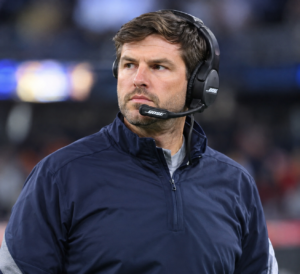
Raiders offensive coordinator Chip Kelly wanted Jeanty to work from a more traditional, bent-knee position. Kelly reportedly used a simple basketball example to explain his thinking. The message was that an athlete naturally gets lower when preparing to react quickly to another player.
This was an interesting coaching moment because the discussion was not simply about forcing a player to look conventional. The goal was connected to preparing Jeanty for different tasks in a professional offense.
A running back may receive the ball, run a route, block a defender, or adjust to a changing play. Coaches want the player to begin in a position that makes all those possibilities easier.
Jeanty handled the situation positively. Rather than turning the matter into a major conflict, he showed a willingness to adapt. That attitude is valuable for any young athlete.
Chip Kelly’s View of the Ashton Jeanty Stance
Chip Kelly’s comments made it clear that he saw the issue as a relatively small adjustment rather than a complete attempt to rebuild Jeanty’s game.
The focus was on body readiness. A slightly lower position could help Jeanty move more naturally into the actions required after the snap.
Kelly emphasized the importance of bent knees in athletic movement and suggested that the change in body position was not dramatic. In other words, the goal was refinement, not reinvention.
This distinction matters.
Great coaches do not always throw away what makes a player special. Sometimes they identify a small detail that could make an already talented athlete more complete.
Jeanty was drafted because of his exceptional ability, not because he needed to become an entirely different player. His vision, strength, balance, and running instincts were already proven.
The stance discussion was about finding the best way to prepare him for the professional game.
That is a much healthier way to look at coaching adjustments. A change does not always mean something was broken. Sometimes it means a good player is trying to become even better.
Jeanty’s Return to His More Familiar Style
The story did not end with the initial adjustment. During his rookie season, Jeanty returned to a more upright version of his familiar stance.
Jeanty explained that the position felt more comfortable and relaxed to him. He also suggested that being different does not automatically mean something cannot work. The Raiders and Jeanty eventually found common ground around what made sense for him on the field.
This development adds an important lesson to the entire debate.
Coaching is often a process. A player tries something new. The coaches watch the results. The player gives feedback. Adjustments are made. Over time, both sides may find a better solution.
It isn’t always a case of one side being completely right and the other completely wrong.
Jeanty’s experience shows that a professional athlete can respect coaching while also understanding his own body and comfort level. The best outcome can come from communication and trust.
Ashton Jeanty Stance Compared With a Traditional Stance
The differences between Jeanty’s familiar upright position and a traditional running back stance can be understood more easily in the following table.
| Feature | Ashton Jeanty’s Familiar Upright Style | Traditional Lower Running Back Stance |
|---|---|---|
| Body position | More upright and relaxed | Lower with bent knees |
| Pre-snap feeling | Calm and comfortable | Loaded and ready to react |
| Movement preparation | Depends on the player’s natural transition | Designed for immediate athletic movement |
| Defensive view | May feel more open and relaxed to the player | Player may focus from a lower eye level |
| Pass protection readiness | May require a quicker adjustment | Lower base can help prepare for contact |
| Personal identity | Became part of Jeanty’s image | Common across many running backs |
| Coaching approach | Depends on player comfort and results | Often preferred as standard technique |
The table shows why the debate exists. Both approaches involve advantages and possible limitations.
There is no magic position that guarantees a successful run. Football success depends on many factors, including the play design, offensive line, defensive alignment, vision, timing, strength, and decision-making.
The stance is only one piece of a much larger puzzle.
Does the Ashton Jeanty Stance Give Him an Advantage?
The answer is not completely simple.
Jeanty has said that the upright position helps him feel relaxed and comfortable while he reads the defense. For a player, feeling calm before the action begins can be useful. Mental readiness is just as important as physical readiness.
A relaxed stance may help him avoid unnecessary tension before the snap. It may also fit the visual routine he has developed over years of playing football.
At the same time, a lower position can provide advantages when a running back must immediately move sideways, block, or accelerate into a route.
Therefore, the best way to judge the stance is through performance rather than appearance alone.
A technique should be evaluated by asking questions such as:
- Can the player react quickly?
- Can the player protect the quarterback?
- Can the player start and stop efficiently?
- Can the player maintain balance?
- Can the player execute the offense correctly?
- Is the technique helping or hurting performance?
Those questions are more useful than simply asking whether the stance looks normal.
The Mental Side of Being Relaxed Before the Snap
One of the most interesting parts of the ashton jeanty stance discussion is the idea of relaxation.
Football can look chaotic, especially to viewers. Players are moving quickly, the crowd is loud, and a single mistake can change the result of a game.
A calm mind can be valuable in that environment.
Jeanty’s upright posture appears to connect with his personal sense of calm before the snap. He has described being relaxed while watching the defense and preparing to make a play.
This does not mean every player should copy him. In fact, athletes should be careful about copying professional techniques without understanding their purpose.
Instead, the larger lesson is that routines matter.
Some athletes bounce before a play. Some take deep breaths. Some repeat a short phrase. Some prefer a quiet and relaxed posture.
A good routine can help a player focus.
For Jeanty, his familiar stance appears to have been part of that process. It’s one of those small details that can make an athlete feel prepared.
What Young Players Can Learn From Jeanty’s Stance
Young football players can learn several useful lessons from Jeanty’s experience.
Comfort Matters
A player should not feel forced to copy every movement of another athlete. Body comfort and confidence can affect performance.
However, comfort should never become an excuse to ignore useful coaching.
Fundamentals Still Matter
Jeanty’s success did not come only from standing upright. His skills were built through years of football development.
Young players should focus on:
- Footwork.
- Vision.
- Ball security.
- Balance.
- Strength.
- Blocking technique.
- Route running.
- Discipline.
The stance is a small part of the overall game.
Listen to Coaches
Even elite athletes receive coaching. Jeanty’s willingness to consider a new stance shows maturity.
A coach may see something that a player does not notice. Sometimes a small adjustment can create a major improvement.
Know Your Own Game
Players also need self-awareness. If a certain routine helps a player stay calm and focused, that information is useful.
The best player-coach relationship involves communication.
Be Ready to Adapt
The move from college football to the NFL required Jeanty to consider new responsibilities. What worked at one level might need adjustment at another.
That lesson applies outside sports too. As situations change, successful people keep learning.
Why Technique Should Not Be Judged Only by Appearance
One reason the ashton jeanty stance became such a big story is that people often judge sports techniques by appearance.
If something looks unusual, viewers may immediately assume it is wrong.
But sports history shows that successful athletes often have unique habits.
A basketball player may have an unusual shooting motion. A baseball player may have a strange batting routine. A tennis player may use a distinctive serve preparation.
What matters most is whether the technique is functional, repeatable, safe, and effective.
That does not mean every unusual technique should be accepted without question. Coaches still need to study whether it creates weaknesses.
The key is balance.
Don’t change something simply because it looks different.
At the same time, don’t keep something simply because it feels familiar.
The smartest approach is to study the evidence, test the adjustment, and communicate honestly.
The Role of Adaptation in Professional Football
Professional football demands constant adaptation.
Defenses study players. Coaches create new schemes. Opponents identify weaknesses. Players must improve their techniques every season.
Jeanty’s development is not limited to his stance. Like every young running back, he has continued working on becoming a more complete player.
A modern running back is expected to do many things. Carrying the football is still important, of course, but it isn’t the whole job.
The player may also need to:
- Catch passes.
- Run different routes.
- Recognize defensive coverage.
- Protect the quarterback.
- Adjust to blitzes.
- Understand the offensive system.
- Make fast decisions.
That is why a stance can become a coaching topic. The position before the snap may affect how quickly a player can perform different responsibilities.
Jeanty’s continued development with the Raiders has included work on areas beyond pure rushing, including becoming a more complete offensive player.
This bigger picture is important. A discussion about one body position should never hide the larger story of an athlete’s development.
The Ashton Jeanty Stance and Personal Identity
Fans often connect athletes with memorable traits.
For Jeanty, the stance became part of his football identity. Before the ball was snapped, viewers could recognize the unusual posture and immediately know who was in the backfield.
That kind of identity can be powerful.
It makes an athlete memorable. It also gives fans something to discuss beyond statistics.
Still, personal identity in sports should not become a trap. A player must be willing to evolve.
Jeanty’s story is interesting precisely because he has shown both sides of the equation.
He has a unique personal preference.
He has also shown a willingness to listen to professional coaching.
That combination can be more valuable than stubbornly insisting on only one way of doing things.
The best athletes often have strong confidence without closing themselves off from improvement.
Common Questions About the Ashton Jeanty Stance
Why does Ashton Jeanty stand upright before the snap?
Jeanty has explained that the position is largely connected to comfort and relaxation. He has used a similar style for years and feels comfortable while reading the defense before the play begins.
Did the Raiders try to change his stance?
Yes. Early in his NFL career, offensive coordinator Chip Kelly wanted Jeanty to use a more traditional position with greater knee bend. The idea was to place him in a stronger all-around athletic position for professional football responsibilities.
Did Ashton Jeanty keep the new stance?
The situation developed over time. Jeanty later returned to a more familiar upright style after discussions and adjustments with the coaching staff.
Does an upright stance make a running back worse?
Not automatically. The effectiveness of a stance depends on the player’s movement, responsibilities, technique, and overall performance.
Should young players copy Jeanty’s stance?
Young players should not blindly copy any professional athlete. It is better to learn sound fundamentals from qualified coaches and develop a position that fits their body and role.
Final Thoughts on the Ashton Jeanty Stance
The ashton jeanty stance is a fascinating example of how a small detail can become a major part of an athlete’s identity. What began as a personal and comfortable way of standing in the backfield became a talking point across college and professional football.
Jeanty’s story teaches us that being different is not automatically a weakness. His unique posture existed alongside one of the most productive college football careers of his era, proving that performance matters more than simply looking conventional. At the same time, his move to the NFL showed why adaptation and coaching are also essential.
The most valuable lesson is balance. Athletes should trust their experience and understand what helps them feel comfortable, but they should also remain open to expert advice. A great player doesn’t have to choose between individuality and improvement. With the right mindset, both can work together.
Jeanty’s journey continues to show how football is a game of constant learning. A stance may change. A role may expand. A player may discover a better way to perform. That’s part of growth, and honestly, that’s what makes the sport so interesting. In the end, the ashton jeanty stance remains a memorable symbol of confidence, comfort, adaptation, and the courage to play the game in a way that feels true to the athlete while still striving to improve.
Stay in touch to get more updates & news on See Blog Hub!