If you have ever wondered how to keep bananas fresh, you are not alone. Bananas are one of the most loved fruits in the world, and also one of the quickest to turn brown. One day they look bright yellow and perfect, and the next they are covered in brown spots. It can feel like a race against time, especially when half a large bunch goes to waste before you can enjoy it.
The good news is that you do not need fancy gadgets to win that race. With a little understanding of how bananas ripen, and a few simple habits, you can stretch their best days by several days, and even keep them for months in the freezer. This guide covers the science in plain language, the methods that really work, and the mistakes to avoid.
Why Bananas Turn Brown So Quickly
Bananas seem to ripen in the blink of an eye, and there is a good reason for that. Unlike berries or citrus fruit, which stop ripening once they are picked, bananas keep on ripening after harvest. They belong to a group called climacteric fruit, which means they continue to change in colour, texture, and flavour long after they leave the plant. That is why a green banana bought on Monday can be bright yellow by Wednesday and heavily spotted by Friday.
As a banana ripens, its starch slowly turns into sugar, which is why a green banana tastes firm and starchy while a ripe one tastes soft and sweet. Enzymes also break down the walls of its cells, so the flesh softens day by day. The green colour fades as chlorophyll breaks down, and brown spots appear later as natural compounds in the peel react with oxygen. A spotted banana is often at its sweetest, so brown spots alone do not mean it has gone bad. Warm air speeds the whole process up, and bruises do the same, because damaged skin lets in more oxygen.
How to Keep Bananas Fresh Starts With Understanding Ethylene Gas
At the heart of banana ripening sits a natural plant hormone called ethylene gas. Bananas produce this gas themselves, and they also react to the ethylene released by other fruit. It works like a signal that tells the fruit it is time to ripen, and once the signal starts, it builds on itself: the banana makes more ethylene, which triggers more ripening, which makes still more ethylene. That self-amplifying loop explains why one ripe banana in a fruit bowl can set off the whole bunch.
Once you understand that loop, the secret of how to keep bananas fresh becomes much clearer. Your goal is not to stop ripening altogether, because that would leave you with a green banana that never turns sweet. Your goal is to slow the loop down, so the banana reaches its best flavour and stays there for longer. You can do that by controlling temperature, by limiting the ethylene that builds up around the fruit, and by protecting the peel from bruises and damp. Apples, pears, tomatoes, and avocados all release ethylene too, so storing bananas next to them speeds ripening up, while a green banana near an apple in a paper bag will ripen sooner.
The Banana Ripeness Stages at a Glance
Before you decide where to store your bananas, it helps to know which stage they are at. Each stage calls for a slightly different approach, and using the wrong one can backfire, so reading the stage correctly is the first step in how to keep bananas fresh. A green banana put in the fridge, for example, may never ripen properly, while a ripe banana left on a warm counter will soften far too fast.
- Green and firm: The banana is unripe, with a green peel and starchy flesh. It needs two to seven days at room temperature, depending on how green it was and how warm your kitchen is.
- Yellow with green tips: The peel is mostly yellow, the flesh is firm, and the flavour is mild. Keep it on the counter for another day or two.
- Bright yellow and ripe: The peel is fully yellow, the flesh is soft but holds its shape, and the flavour is sweet and mellow. Eat it now, or move it to the fridge if you cannot eat it within a couple of days.
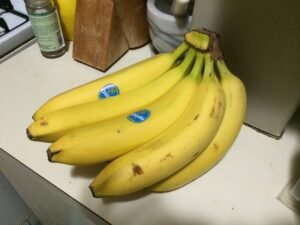
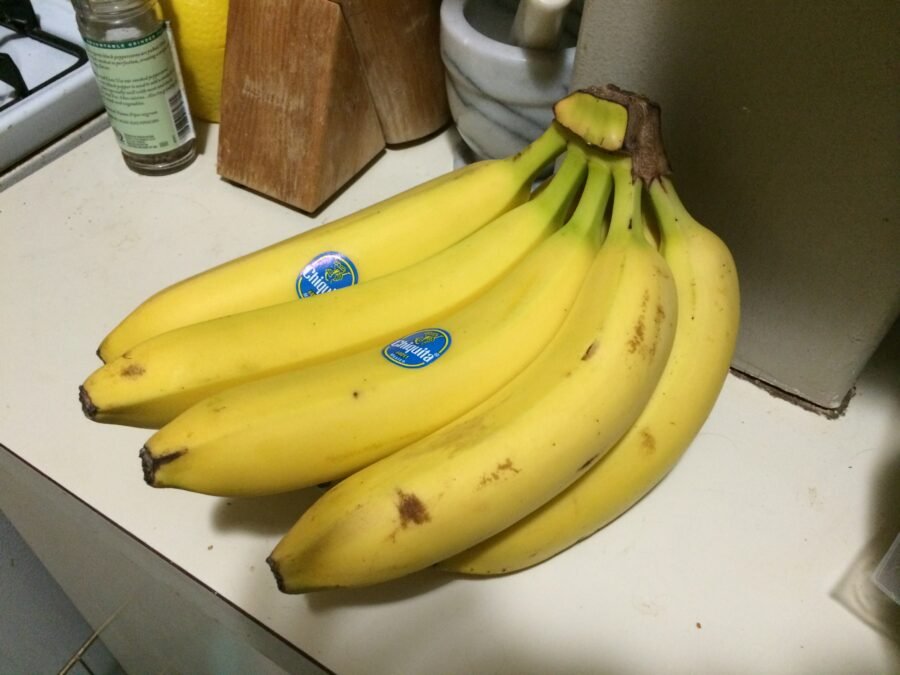
- Yellow with brown spots: The banana is very ripe and very sweet, with softer flesh and a richer, honey-like flavour. It is perfect for eating, smoothies, or baking. If you are not ready to use it, freeze it now.
- Mostly brown and very soft: The banana is overripe. The peel looks unappealing, but the flesh is usually still fine for cooking, baking, or freezing for smoothies.
Learning to read these stages takes the guesswork out of storage: look at colour and firmness, and you will know at once where a banana belongs.
How to Keep Bananas Fresh on the Counter
For most of the week, the kitchen counter is where your bananas will live, and that is exactly where they should be while they are still ripening. The simplest answer to how to keep bananas fresh on the counter is to give them a cool, dry spot away from direct sunlight and away from the cooker. A shaded corner of the worktop, a pantry shelf, or a cupboard shelf all work well, as long as the air can move freely around the fruit.
Bananas ripen best at around 65 to 72 degrees Fahrenheit, or about 18 to 22 degrees Celsius. In a much warmer kitchen, a ripe banana may last only two to three days before it turns very soft. Airflow matters too. A sealed plastic bag traps ethylene gas around the fruit and speeds ripening up, and the same is true of a closed container or a crowded fruit bowl. An open spot on the counter, or a banana hook that lets air move around each fruit, gives you a much better result, so take bananas out of any plastic produce bag as soon as you get home. A hook also helps by keeping the fruit off the counter, so it bruises less.
Separate the Bananas and Wrap the Stems
One of the oldest pieces of advice about bananas is to pull them apart from the bunch, and it holds up well. When bananas stay clustered together, each fruit sits in the ethylene released by its neighbours, so the whole bunch ripens faster than a single banana on its own. Gently twisting each banana away from the crown, rather than yanking it off, reduces that shared exposure and gives each fruit a little more time.
Wrapping the stems is the natural partner to separating the bunch. Much of a banana’s ethylene escapes through the crown, the thick stem end where the fruits join. Covering that area with plastic wrap or aluminium foil creates a partial barrier that slows the gas down. Many home cooks report that this trick adds three to five days, although results vary, and it works best combined with the other habits in this guide. Twist each banana gently away from the bunch, wrap a small square of plastic wrap or foil tightly around each cut stem, replace it if it comes loose, and leave space between the bananas so air can move freely.
Keep Bananas Away From Other Fruit and Heat
Where you put your bananas matters just as much as how you wrap them. Apples, pears, tomatoes, and avocados all release ethylene gas, and placing bananas beside them is like turning up the ripening dial. If your fruit bowl holds a mix of everything, the bananas will almost always lose the race. Give them their own spot, away from those neighbours, and they will last noticeably longer.
Heat is the other quiet enemy. A sunny windowsill may look cheerful, but the warmth speeds up every chemical reaction in the banana. The top of the fridge, the shelf beside the oven, and the counter next to the kettle are all warm spots that shorten a banana’s life, so choose a cool, shaded corner instead. Keep bananas dry too: do not wash them before storage, because surface moisture encourages mould, and if one gets wet, pat it dry gently.
How to Keep Bananas Fresh in the Fridge
The fridge is often misunderstood. Many people avoid it because they have seen a refrigerated banana turn black and assumed it had gone bad, while others put green bananas in the fridge and wonder why they never ripen. The fridge can be a great tool, but only at the right stage. Learning how to keep bananas fresh in the fridge starts with one clear rule, which is to wait until the banana is fully ripe before chilling it.
Once a banana is bright yellow and just how you like it, moving it to the fridge slows further ripening right down, because the cold puts the brakes on the enzymes that soften the flesh. The peel will darken, often turning brown or even black within a day or two, yet the flesh inside usually stays firm, sweet, and perfectly good to eat. The dark peel is a cosmetic change, not a sign that the fruit has gone off. According to the United States Department of Agriculture’s FoodKeeper guide, ripe bananas keep for about three days in the fridge, although many home cooks report they can stay pleasant for up to a week.
Use the three-day figure as a safe guide, and move any banana you have not eaten by then into the freezer. Keeping the fridge itself clean helps too — see our guide on how to clean a refrigerator.
Never put a green or underripe banana in the fridge. Cold below about 55 degrees Fahrenheit, or about 13 degrees Celsius, can damage the fruit before it has ripened, and it may never develop its full sweetness or soft texture, even after you bring it back to room temperature. Ripen on the counter first, then chill once ripe, and never the other way round.
How Long Bananas Last in Each Place
The figures below combine USDA FoodKeeper guidance with widely reported practical experience, and they assume the bananas were stored correctly, at the right stage, in a typical home kitchen. Your own results may vary by a day or two.
| Storage method | Banana stage | How long it lasts | What to expect |
|---|---|---|---|
| Counter, open air | Green and unripe | Two to seven days to ripen | Peel turns yellow, flesh softens and sweetens |
| Counter, open air | Ripe and yellow | Two to five days | Peel develops brown spots, flesh becomes very soft |
| Fridge | Ripe and yellow | About three days by USDA guidance, often up to a week in practice | Peel darkens or turns black, flesh stays firm and sweet |
| Fridge | Green and unripe | Not recommended | Ripening stalls, peel may grey, flesh stays hard |
| Freezer, peeled | Ripe or overripe | Two to three months at best quality | Fruit freezes solid, best for smoothies and baking |
| Freezer, in the peel | Ripe or overripe | Two to three months at best quality | Peel turns black, flesh is harder to peel when frozen |
| Paper bag on the counter | Green and unripe | Two to three days to ripen faster | Trapped ethylene speeds ripening, useful when you want ripe bananas soon |
| Banana hook, open air | Ripe and yellow | About four to six days | Less bruising, even airflow, ripening stays steady |
Read the table as a planning tool, not a strict promise. Green bananas bought on Monday should be ripe by Wednesday or Thursday, and ripe bananas bought on Saturday should be eaten within a few days, or frozen while they are still at their best.
How to Keep Bananas Fresh in the Freezer
When you have more ripe bananas than you can eat, the freezer is your best friend. Freezing stops ripening in its tracks, and it keeps bananas at their peak sweetness for two to three months at best quality, according to USDA FoodKeeper guidance. Frozen bananas remain safe to eat for longer than that, but their texture and flavour slowly decline, so it is best to use them within that window for the tastiest results.
If you are wondering how to keep bananas fresh for months rather than days, this is the answer. Start with ripe or slightly overripe bananas, because the freezer preserves the flavour they already have, and it will not improve a green banana. Peel each one, and either leave it whole for baking or slice it into rounds for smoothies. The step that makes the biggest difference is flash freezing: lay the pieces in a single layer on a baking tray lined with baking paper, making sure they do not touch, and freeze for about two hours until solid. Then move them into a freezer bag or airtight container, press out as much air as you can, seal it, and label it with the date, so you can take out exactly as many as you need.
You can also freeze mashed banana, which is handy if you bake often. Mash ripe bananas, stir in about half a teaspoon of lemon juice per cup to slow browning, and pack the mash into a freezer-safe container, leaving a little room for it to expand. Thaw it in the fridge when you are ready to bake. Thawed bananas will be soft and a little watery, which is fine for banana bread, muffins, and smoothies, but they will not have the firm bite of a fresh banana.
How to Keep Sliced Bananas Fresh
Sliced bananas are a different challenge from whole ones, because cutting exposes the flesh to oxygen, and the enzyme that causes browning gets to work right away. A sliced banana left uncovered on a plate can start to brown within an hour, and it will look tired long before it tastes bad. The good news is that a little acidity and a little care can slow that process down a lot.
Lemon juice is the classic fix for how to keep bananas fresh after slicing, because its acidity slows down the browning enzyme. Brush a small amount over the cut surfaces, just enough to coat them lightly. Lime, orange, and pineapple juice work in a similar way, and they suit a sweeter flavour. Use only a few drops per slice, or the banana will taste sour. Then store the slices in an airtight container in the fridge, with the lid on firmly, and press plastic wrap directly onto them for extra protection. In those conditions, sliced bananas usually stay pleasant for one to two days. For a fruit salad, add the slices at the last minute, just before serving.
What to Do With Overripe Bananas
Even with the best storage habits, a banana will sometimes slip past its prime before you get to it. That is not a failure, and it is certainly not a reason to throw it away. An overripe banana, with a heavily spotted or mostly brown peel, is often at its sweetest, and it has a second life in the kitchen.
Banana bread is the classic answer, and it exists for exactly this reason. The soft, sweet flesh mashes easily, blends smoothly into batter, and adds moisture and natural sweetness. The same is true of muffins, pancakes, and oatmeal. Smoothies are another easy win: a frozen overripe banana blends into a thick, creamy base that tastes almost like soft-serve ice cream, with no added sugar needed. Pair it with milk or yoghurt, peanut butter, or berries for a quick breakfast. A brown banana is not waste, it is an ingredient waiting for its moment. Bake it in a clean tin — if yours is scorched, see how to clean a burnt pan.
Common Mistakes That Make Bananas Go Bad Faster
If you are learning how to keep bananas fresh, note that most bananas do not go bad because of one big error. They go bad because of a handful of small habits that add up over the week. The good news is that each one is easy to fix, once you know what to look for.
- Storing them in a sealed plastic bag: A closed bag traps ethylene and moisture, which speeds ripening and can encourage mould. Store bananas in the open air.
- Putting green bananas in the fridge: Cold stops an unripe banana from ripening properly. Wait until it is fully yellow before chilling it.
- Leaving them in direct sunlight: A sunny windowsill looks cheerful, but the heat ripens fruit days earlier than expected. Choose a cool, shaded spot.
- Stacking them under heavy shopping: Bananas bruise easily, and a bruise soon becomes a brown patch. Place them on top of your shopping, and handle them gently.
- Keeping them beside apples and tomatoes: These fruits release large amounts of ethylene. Give bananas their own space, unless you are deliberately ripening them quickly.
- Washing them before storage: Water left on the peel encourages mould. Only wash a banana if it is dirty, and dry it gently.
- Waiting too long to freeze them: Freeze bananas while they are still at their best, not after they have gone past it.
- Ignoring the ripest one: Eat the ripest banana first. Leaving it in the bunch lets its ethylene push the rest along faster.
How to Keep Bananas Fresh When You Buy in Bulk
Buying bananas in bulk can save money, but only if you have a plan for how to keep bananas fresh before they all ripen at once. The trick is to buy at different stages of ripeness: one bunch mostly green, one yellow with green tips, and one fully yellow. That way, you will have bananas ready today, more ready in two or three days, and the last bunch ready towards the end of the week.
When you get home, separate the bunches and wrap the stems. Put the ripest bunch where you will reach for it first, and keep the greenest bunch in the coolest spot you have, away from other fruit. Check the bananas each morning, and move any that have reached their peak into the fridge if you are not ready to eat them. For a large shop, the freezer is part of the plan from the start, not a last resort. Decide how many bananas you will eat fresh, freeze the rest as soon as they reach the ripeness you like best, label each bag with the date, and use the oldest bag first.
Putting It All Together for Fresher Bananas
Learning how to keep bananas fresh is less about a single clever trick and more about a handful of good habits that work together. Understand ethylene gas, and you will see why separating the bunch, wrapping the stems, and keeping bananas away from apples makes such a difference. Respect the ripeness stages, and you will know when the counter is right and when the fridge or freezer is the better choice.
Start small if that feels easier. Pick one change this week, such as wrapping the stems or moving the fruit bowl out of the sun, and see how much longer your bananas last. Then add another habit next week, and another the week after. Before long, you will have a routine that feels natural, and you will waste far fewer bananas than you used to.