Few things spoil a quiet morning faster than a trail of tiny ants marching across your kitchen counter. One minute the room looks spotless, and the next, a thin black line is making a beeline for the sugar bowl. If that scene sounds familiar, you are in good company — ants are among the most common household pests in the United States, and learning how to get rid of ants in the house is a skill almost every homeowner needs sooner or later.
The good news is that you do not need to panic, and you certainly do not need to reach for the strongest spray on the shelf straight away. Most ant problems can be solved with a calm, step-by-step plan: find out what kind of ant you have, cut off its food and water, use the right bait or remedy, and seal the doors it used to get in. This guide on how to get rid of ants in the house walks you through every step, from spotting the first scout ant to knowing when it is time to call in a professional. By the end, you will know exactly how to get rid of ants in the house — safely, cheaply, and for good.
Why Learning How to Get Rid of Ants in the House Matters
Ants may look harmless, but they are far more than a small nuisance. A single colony can hold tens of thousands of workers, and once scouts find a reliable food source in your home, they lay down a scent trail that guides hundreds of their nest-mates straight to it. Before you know it, a few stray ants turn into a steady parade.
There are practical reasons to act quickly, too. That is why learning how to get rid of ants in the house early saves you money, time, and stress later on. Some ants, such as carpenter ants, tunnel through damp or damaged wood and can cause costly structural damage over time. Others, like pharaoh ants, are known to wander through hospitals and food areas, where they can carry germs on their bodies. Even the plain little black ants on your counter can contaminate food, which means anything they have walked over should be thrown away rather than rinsed and eaten.
The sooner you start, the easier the job is. A fresh trail with a handful of scouts is a weekend project. A colony that has settled into your wall voids for months is a much bigger headache. So take a deep breath, grab a flashlight, and let us get started.
What Brings Ants Indoors in the First Place
Ants do not invade your home because they have a grudge against you. They come inside for the same three reasons every living creature looks for shelter: food, water, and a safe place to nest. Understanding those motives is half the battle, because once you understand what attracts them, how to get rid of ants in the house becomes much clearer: take away the food, the water, and the easy way in.
Food is the biggest draw by far. Ants have a sweet tooth, and even a few crumbs of cake, a sticky jam jar ring, or a drop of honey on the counter can feed a whole trail. Greasy foods attract other species, so the butter dish and the pet food bowl are just as tempting. In fact, many ant species switch between sweet and protein-rich foods depending on what the colony needs at the time, so do not assume that hiding the sugar alone will solve the problem.
Water is the second magnet. Leaky pipes under the sink, a dripping tap, condensation on cold water lines, and damp towels left on the bathroom floor all give ants the moisture they need. That is why ant trails so often appear in kitchens and bathrooms first.
Finally, ants slip in through gaps you would never notice — a hairline crack in the foundation, a gap around a window frame, a space where a pipe passes through the wall, or a worn door sweep. To an ant, a crack the width of a credit card is a wide-open highway.
How to Get Rid of Ants in the House Starts With Identification
Before you buy anything or mix any remedy, take a few minutes to work out which ant you are dealing with — it is the first real step in how to get rid of ants in the house. Different species respond to different treatments, and what wipes out one kind may barely slow down another. Identification also tells you whether you are facing a simple nuisance or a species that can damage your home.
Start by watching the ants rather than squashing them. Note their size, their colour, where they are travelling, and what food they seem interested in. Are they tiny and dark brown, marching in a neat line to the sugar? Are they large and black, wandering alone near damp wood? Do they give off a strange smell — a bit like rotten coconut — when crushed? Each clue narrows the list down.
A phone photo helps enormously. Snap a close-up of an ant on white paper next to a coin for scale, and note the room, the time of day, and the food it was visiting. If you later need advice from a local extension office or a pest professional, that photo and those notes will save everyone a lot of guessing.
Telling Ants Apart From Termites
Winged ants are often mistaken for termites, especially during swarming season, so it is worth knowing the difference. Ants have a thin, pinched waist and elbowed antennae, and their hind wings are smaller than their front wings. Termites have a thick, straight waist, straight antennae, and four wings of roughly equal size. If you see winged insects indoors, do not brush it off — take a photo and compare, because termites need a very different response.
Common House Ants You Are Likely to Meet
Across the United States, a handful of species cause most indoor ant trouble. Cornell University’s Cooperative Extension lists carpenter ants, pavement ants, and odorous house ants among the most common species found in houses, along with little black ants and pharaoh ants. Here is a quick field guide to the usual suspects — a useful first step in how to get rid of ants in the house.
- Odorous house ants — About 1/8 inch long, brown to black, and famous for the odd coconut-like smell they give off when crushed. They love sweets and moisture, nest in wall voids and near water pipes, and are probably the most common kitchen ant in the country.
- Pavement ants — Also about 1/8 inch long, dark brown to black, with fine grooves on the head and body. They nest under sidewalks, slabs, and stones, and sneak indoors through foundation cracks. Look for tiny piles of sand near a slab crack or along the foundation wall.
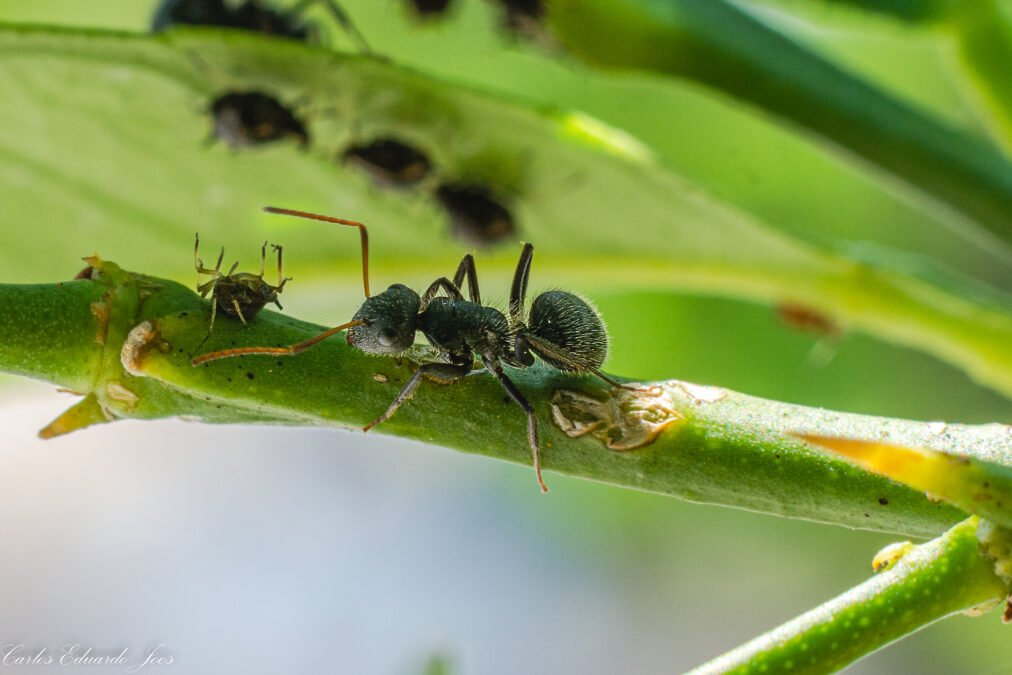
- Carpenter ants — The big ones, with workers ranging from 1/4 to 1/2 inch long. They are usually black, sometimes with a dull red middle section. They do not eat wood — they chew through damp or damaged wood to build nests — but the sawdust-like shavings they leave behind are a warning sign worth taking seriously.
- Little black ants — Tiny, dark, and fond of kitchens. They nest in soil, under stones, and in wall voids, and they are often found trailing to crumbs and grease.
- Pharaoh ants — Very small, yellowish ants that prefer warm, humid spots indoors and can nest almost anywhere, including inside walls and appliances. They are tricky because they form multiple small colonies, and disturbing them can make them split and spread further. For pharaoh ants, baits are the way to go — never use a repellent spray on them.
If you are still unsure which species you have, your local Cooperative Extension office can help with identification, often for free. The Penn State Extension guide to common pest species of ants is a solid starting point for comparing photos and traits.
How to Get Rid of Ants in the House With a Quick Clean-Up
Whatever method you choose later, the first step is always the same: clean up and cut off the food supply. Baits work far better when ants have nothing else to eat, and a good clean-up alone can sometimes end a small invasion.
Start by following the trail. Watch where the ants are coming from and where they are going, but resist the urge to squash the whole line straight away — for now, you want to learn their route. Then wipe the trail with soapy water or a 50/50 mix of white vinegar and water. This erases the scent markers the ants use to find their way back, which is like wiping the road signs off their highway.
Next, give the kitchen a proper deep clean:
- Wipe down counters, stove tops, and the outside of jars and bottles to remove sticky residue.
- Sweep and mop the floor, paying attention to corners and under appliances where crumbs gather.
- Empty the bin often, and keep it closed with a tight-fitting lid.
- Wash pet food bowls after each meal rather than leaving food out all day.
- Store sugar, flour, cereal, and snacks in sealed glass or hard plastic containers — ants can chew through thin plastic bags and cardboard boxes.
- Fix any dripping taps and wipe up standing water, including in the sink and around the dishwasher.
This clean-up will not, on its own, finish the job of how to get rid of ants in the house — it will not kill the colony hiding in your walls, but it takes away the reward that keeps the ants coming back. Think of it as cutting off their supply lines before the real battle begins.
Natural Remedies That Really Work
Natural remedies have a well-earned place in ant control, but it helps to be honest about what each one can and cannot do. Repellents push ants away from a spot, killers deal with the ants you can see, and baits are the only DIY option that can reach the hidden colony and its queen. The smartest approach to how to get rid of ants in the house is to match the tool to the job — and often to combine two or three methods at once. Choosing the right combination is a useful part of how to get rid of ants in the house.
Before we dive in, a word of caution: natural does not always mean harmless. Borax, boric acid, essential oils, and even diatomaceous earth can cause harm when they are misused, so keep every treatment away from children, pets, and food preparation areas, and always follow the label on any product you buy.
Boric Acid Baits: The Quiet Colony Killer
If you only try one remedy for how to get rid of ants in the house, make it a slow-acting bait. Baits work because worker ants carry the poisoned food back to the nest and share it with the rest of the colony, including the queen. Kill the queen, and the colony collapses. Sprays, by contrast, only kill the workers you can see, and the colony simply sends more.
A classic homemade recipe uses borax or boric acid mixed with sugar water. One widely shared formula calls for 1/2 teaspoon of borax, 8 teaspoons of sugar, and 1 cup of warm water, stirred until dissolved. Cotton balls soaked in the mixture are then placed near — not on — the ant trail. University and extension guidance generally recommends keeping boric acid concentrations low, around 0.5 to 1 percent, because a bait that is too strong kills workers before they can carry it home.
Expect patience to be part of the deal. According to the University of California’s integrated pest management guidance, baits typically need five to ten days before you see noticeably fewer ants, and a full colony may take two to three weeks to die off. During that time, do not be tempted to spray the trail — the spray will scare ants away from the bait and undo all your hard work.
Ready-made bait stations are the safest option for most households, especially those with children or pets. They come in enclosed, tamper-resistant containers, so the poison stays inside while the ants walk in and out. Place them along the trail, near entry points, and beside food sources, and leave them undisturbed. Check them every few days and replace them when they are empty.
A Quick Word on Borax Safety
Borax is a naturally occurring mineral, but it is still a poison. Small accidental tastes usually cause no more than nausea or vomiting, according to poison control guidance, yet larger amounts can be serious. Always store borax out of reach, never place open bait where a child or pet could reach it, and wash your hands after handling it. If anyone swallows borax, contact your local poison control centre right away.
Diatomaceous Earth and Other Dry Barriers
Food-grade diatomaceous earth, often shortened to DE, is a fine powder made from the fossilised remains of tiny aquatic organisms called diatoms. It is not a chemical poison. Instead, its microscopic sharp edges scratch the waxy coating on an ant’s body, causing the insect to dry out and die, usually within 24 to 72 hours.
It is a useful supporting tool in how to get rid of ants in the house, but remember it only kills the ants that actually walk through it — it has no effect on the nest itself.
To use it, dust a barely visible film — not a big pile — along baseboards, in dry cracks, behind appliances, and anywhere ants must cross to reach your kitchen. A little goes a long way, and a thick heap is actually less effective because ants simply walk around it. Use a squeeze duster or an old spice shaker for a thin, even line.
DE has one important weakness: it stops working when it gets wet. Skip damp bathrooms and steamy areas until they are dry, and reapply after mopping or rain. It is low in toxicity for people and pets, but the fine dust can irritate lungs, so avoid breathing it in and keep it away from faces. Only ever use food-grade DE, never the pool-grade version, which contains a different form of silica that is hazardous to breathe.
Other dry barriers work on a similar keep-out principle. A thin line of cinnamon, coffee grounds, or chalk across a doorway may confuse a trail for a day or two, but these are short-term tricks rather than lasting solutions. Use them to buy time while your baits do the real work.
Essential Oils and Vinegar: Repellents With Limits
Peppermint oil is the best-known ant repellent, and there is a good reason for its fame: ants navigate largely by smell, and a strong scent like peppermint, tea tree, or citrus can scramble their trail markers. Mix 10 to 15 drops of peppermint essential oil with water in a spray bottle, add a drop of dish soap to help it mix, and spray it along window sills, door frames, and the edges of counters.
Vinegar works in a similar way. A 50/50 mix of white vinegar and water wipes away the scent trail and leaves a smell ants dislike. Lemon juice, with its citric acid, does much the same job.
Be realistic about what these sprays can achieve in how to get rid of ants in the house, though. Repellents push ants to a different route; they do not kill the colony. They are wonderful for keeping ants out of a particular cupboard or off a particular counter, but on their own they are a game of whack-a-mole — block one path and the ants find another. Think of them as a supporting act, not the star of the show.
Also keep in mind that essential oils are not safe for every household. Some oils, including tea tree and peppermint, can be harmful to cats and dogs, so check with your vet before using them around pets, and never apply undiluted oils where animals can lick them.
Store-Bought Baits and Sprays
When natural remedies are not quite enough, the supermarket shelf offers a range of ready-made products. Knowing the difference between them will save you money and frustration. That is especially true when you are learning how to get rid of ants in the house.
Bait stations and gel baits are the most effective store-bought option for anyone learning how to get rid of ants in the house. They work on the same principle as homemade borax baits: slow-acting poison, carried home and shared. Look for products containing borax, boric acid, or hydramethylnon, and choose sweet-based baits for sugar-loving ants and protein-based baits for grease-loving species. If one type is ignored for a few days, try the other — ants can be picky, and their tastes change with the season.
Contact sprays kill ants on contact and leave a residue that keeps killing for a while. They are satisfying to use, but they have a real downside: spraying a trail scatters the colony and can cause some species, especially pharaoh ants, to split into several new colonies. Use sprays only for a quick knockdown of a heavy trail, and never spray near your bait stations.
Granular baits and barrier sprays are mainly for outdoor use around the foundation. They can reduce the number of ants that ever reach your walls, but read the label carefully — some products are toxic to fish, bees, and other wildlife, and they should never be applied near ponds or flowering plants.
Foggers, or bug bombs, are best avoided for ants. They fill the air with pesticide, push ants deeper into wall voids, and rarely reach the nest. The US Environmental Protection Agency’s own guidance on integrated pest management in child care settings notes that over-the-counter sprays and foggers are not compatible with baits and can be dangerous to children’s health. In most homes, a bait is both safer and more effective.
How to Get Rid of Ants in the House by Sealing Entry Points
Killing the ants you see is only half the job. If you do not close the doors they used, new ants will simply move in. Sealing entry points — pest professionals call this exclusion — is the most permanent step you can take in how to get rid of ants in the house.
Walk around your home with a torch and a tube of caulk, inside and out. Look for:
- Cracks in the foundation and gaps where pipes and cables enter the house
- Gaps around window and door frames, and worn or missing weather stripping
- Spaces under doors — a simple door sweep can close a gap that ants treat as a front door
- Cracks in the kitchen backsplash, around the sink, and behind the stove
- Loose vent covers and gaps around the dryer vent
Seal small cracks with silicone caulk, fill larger gaps with expanding foam or copper mesh (ants cannot chew through copper), and replace damaged weather stripping. Trim back tree branches and shrubs that touch the house, since ants use them as bridges, and keep firewood stacked away from the walls.
One caution: do not seal a crack while ants are actively using it as their only route, or you may trap them inside with nowhere to go but deeper into your home. Deal with the colony first with baits, then seal the entry once traffic has stopped.
Kitchen Habits That Keep Ants Away for Good
The kitchen is where most ant invasions begin, so it is also where the best prevention happens. The good news is that the habits that keep ants away are the same ones that keep any kitchen pleasant — nothing fancy, just consistency. Those habits are also the foundation of how to get rid of ants in the house for good.
Keep counters wiped and floors swept every evening, and never leave dirty dishes soaking in the sink overnight. Store leftovers in sealed containers and wipe up spills straight away, especially sweet ones like juice, jam, and syrup. Take the rubbish out regularly and give the bin a wash now and then, since a sticky bin is an open invitation.
Pantry storage deserves a little attention, too. These small daily habits are the quiet backbone of how to get rid of ants in the house for good. Transfer dry goods like sugar, flour, rice, and cereal into airtight glass jars or hard plastic containers with snap-on lids. Cardboard boxes and thin plastic bags are no match for determined ants. While you are at it, check the back of the pantry for forgotten, half-open packets — a stale box of crackers can feed a trail for weeks.
If you have dealt with other kitchen pests before, you will notice a familiar pattern: clean, dry, and sealed beats fancy products every time. Our guide on how to get rid of fruit flies follows the same principle, and the habits that stop fruit flies — removing food sources, wiping surfaces, and storing food properly — work just as well against ants.
Bathroom and Laundry Room: The Hidden Water Trail
Ants do not only come for food — they come for water, too, and the bathroom and laundry room are full of it. Odorous house ants and pharaoh ants in particular love warm, damp places, so a slow leak under the sink or a damp bath mat can be every bit as attractive as a sugar bowl. Spotting those damp spots early helps with how to get rid of ants in the house.
Check under sinks and around toilets for drips, and fix them promptly. Wipe up standing water after showers, hang towels so they dry fully, and keep the area under the sink tidy and dry. In the laundry room, clear out lint, fix any dripping washer hoses, and store detergents in sealed containers — some ants are attracted to the sweet scents in laundry products.
Ventilation helps as well. A bathroom fan that actually gets used keeps humidity down and makes the whole room less inviting. If your bathroom has no fan, opening a window after a shower is the next best thing.
Natural Remedies vs Store-Bought Treatments
With so many options on the table, it helps to see them side by side. The table below compares the most common approaches so you can pick the right combination for your situation.
| Method | How it works | Best for | Main drawback |
|---|---|---|---|
| Vinegar or soapy water spray | Erases scent trails and repels ants | Quick clean-up of a fresh trail | Does not kill the colony |
| Peppermint or citrus oil spray | Strong scent scrambles ant trails | Keeping ants out of a specific spot | Short-lived; unsafe for some pets |
| Borax or boric acid bait (DIY) | Workers carry poison back to the queen | Killing the whole colony cheaply | Slow (5–10 days); toxic if eaten by kids or pets |
| Ready-made bait stations | Enclosed slow-acting poison | Safe, effective colony control in homes with kids or pets | Takes days to work; ants may ignore one flavour |
| Food-grade diatomaceous earth | Dries ants out on contact | Dry cracks and hidden routes | Useless when wet; dusty and irritating to lungs |
| Contact sprays | Kill ants on contact | Quick knockdown of a heavy trail | Scatters the colony; can make pharaoh ants split |
| Granular outdoor baits | Colony poison spread outside | Reducing ants before they reach the house | Weather washes it away; toxic to some wildlife |
| Professional treatment | Targeted baits and dusts applied by an expert | Large, stubborn, or carpenter ant problems | Costs more than DIY methods |
The takeaway is simple: no single method does everything. The strongest plan pairs a bait for the colony with a repellent for the counters and sealing to keep newcomers out. And if you are weighing up other household cleaning challenges, our guide on how to remove coffee stains shows the same practical, step-by-step approach applied to a different everyday problem.
When to Call an Exterminator
Most ant problems are very manageable on your own, but there are times when calling a professional is the wiser — and cheaper — move. If any of the following sound familiar, it is time to pick up the phone:
- You have tried baits and cleaning for two to three weeks with no real improvement.
- The ants keep coming back in the same place no matter what you try.
- You are seeing large black ants, sawdust-like shavings, or faint rustling sounds in the walls — all signs of carpenter ants, which can damage wood over time.
- You have found ants in food storage areas, a baby’s room, or anywhere hygiene is critical.
- You suspect pharaoh ants, which are notorious for splitting into new colonies when disturbed.
- Someone in the household is allergic to ant stings, or the species involved is a stinging one such as fire ants.
A good pest professional will start by identifying the species, then find the nest and choose a targeted treatment — often professional-grade baits or dusts placed in wall voids where DIY products cannot reach. Ask what products they plan to use, whether they are safe around children and pets, and what follow-up visits are included. A reputable company will be happy to explain all of it.
Keeping Kids and Pets Safe While You Treat Ants
An ant-free home should never come at the cost of your family’s safety. The golden rule is simple: place every treatment where ants can reach it and children and pets cannot.
Ready-made bait stations are the safest choice for most families because the poison is enclosed. Tuck them behind appliances, inside cupboards, under the sink, or along the back of a counter — anywhere a curious toddler or a nosy dog cannot easily reach. Never put open bait, loose borax, or soaked cotton balls on the floor or on a low surface.
With sprays, keep children and pets out of the room until the product has dried completely, and never spray on or near food, dishes, or pet bowls. Store all pest products in their original containers, out of reach and out of sight, and keep the packaging so you can show a doctor or vet exactly what was used if anyone is accidentally exposed.
Essential oils deserve a special note. Peppermint, tea tree, and several citrus oils can be toxic to cats and dogs, so check with your veterinarian before using them, and never let pets lick treated surfaces. Food-grade diatomaceous earth is low in toxicity, but it can irritate lungs, so apply it in thin lines in places where it will not be kicked up into the air.
If a child or pet swallows any pest product, do not wait for symptoms. Call your local poison control centre immediately and have the product label in hand.
A Simple Plan That Actually Works
By now you have a full toolkit, but the sheer number of options can feel overwhelming. Here is the whole approach boiled down to a simple weekly plan you can start today.
Day one: Watch the trail, identify the ant if you can, and clean the kitchen thoroughly. Wipe the trail with vinegar water, remove every food and water source you can find, and store dry goods in sealed containers.
Days one to three: Place bait stations — or a homemade borax bait in a safe, enclosed spot — along the trail and near entry points. Do not spray the trail. Let the ants do the work of carrying the bait home.
Days three to seven: Keep cleaning, refresh the bait if it runs out, and watch for fewer ants. Expect numbers to drop gradually, not overnight.
Week two: Once traffic has slowed or stopped, seal the cracks and gaps the ants were using, replace worn weather stripping, and fix any drips or leaks you found.
Ongoing: Keep up the kitchen habits, check bait stations monthly during ant season, and repeat the clean-up if you ever spot a scout again. A quick response to the first few ants is worth more than a big effort later.
If you follow this plan, you will find that learning how to get rid of ants in the house is less about fighting a war and more about quietly changing the conditions that brought the ants inside in the first place. Ants are persistent, but they are also practical — take away the food, the water, and the easy way in, and they will look for an easier home somewhere else.
Final Thoughts on How to Get Rid of Ants in the House
Ants in the kitchen can test anyone’s patience, but they are a solvable problem, and you now have everything you need to solve it. Start with identification, clean up the food and water that drew them in, choose a slow-acting bait to reach the colony, and finish by sealing the gaps that let them in. Use natural remedies where they shine, reach for a store-bought bait when you need extra power, and call a professional when the problem is bigger than a DIY fix.
The best part is that the habits which keep ants away — a clean kitchen, sealed food, dry sinks, and sealed cracks — make your whole home fresher and healthier at the same time. So take the first step today: follow the trail, wipe it clean, and set out a bait. With a little patience and the right plan, you will soon be able to say that you know how to get rid of ants in the house — and that your home is ant-free for good.