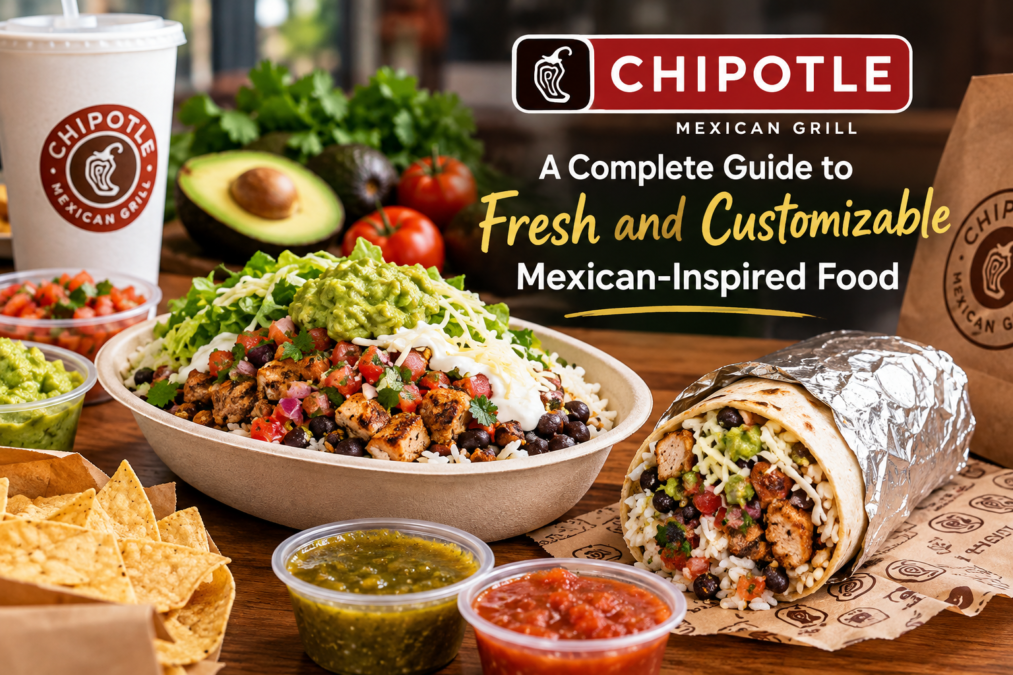
When it comes to quick meals with fresh flavors and plenty of choices, chipotle has become a popular name among food lovers. The restaurant is known for Mexican-inspired food that lets customers build meals according to their own tastes. Instead of choosing from only a few fixed combinations, diners can select their preferred rice, beans, protein, vegetables, salsa, and toppings.
The simple idea behind the restaurant is what makes it appealing. You can keep your meal light and fresh, or you can create something filling and rich in flavor. Either way, the customer has control over the final meal.
The brand has also built its identity around fresh preparation, responsible sourcing, food quality, and customer choice. For someone visiting for the first time, the large selection may seem a little confusing. Don’t worry, though. Once you understand how the menu works, ordering becomes quite easy.
This guide explains the food, menu choices, ingredients, ordering process, nutrition, food safety, sustainability, and overall dining experience. Whether you’re a regular customer or simply curious about the restaurant, this guide can help you understand what makes the brand different.
What Makes chipotle Different?
One of the biggest differences is the way customers create their meals. In many traditional fast-food restaurants, you select a meal that has already been designed. Here, you can choose individual ingredients and combine them yourself.
For example, one person might order a bowl with chicken, rice, beans, vegetables, and mild salsa. Another person might choose tacos with steak, cheese, and a spicy salsa. Both customers are using the same basic menu, but their meals can taste completely different.
This flexibility is useful because people have different food preferences. Some enjoy spicy flavors, while others prefer mild and simple meals. Some customers want extra vegetables, while others want more protein.
The restaurant also follows a fast-casual model. This means customers can enjoy freshly prepared food without the longer waiting time often associated with traditional sit-down restaurants.
Understanding the chipotle Menu
The menu is built around a simple meal-building process. Customers usually start by selecting a main format and then choose ingredients to complete it.
Popular choices include:
- Burritos
- Burrito bowls
- Tacos
- Salads
- Chips
- Salsa
- Guacamole
- Different protein options
A burrito is wrapped in a large flour tortilla and can hold several ingredients. A bowl contains similar ingredients but doesn’t use a tortilla. Tacos are smaller and are a good choice when you want something easy to eat.
A salad can be useful for people who want a meal based more heavily on vegetables. You can still add protein, beans, salsa, and other toppings.
The menu may also include limited-time items. These special choices can give returning customers something new to try while familiar favorites remain available.
Popular Ingredients and Flavor Choices
The ingredients are an important part of the dining experience. Each ingredient adds its own flavor, texture, or freshness.
Rice
Rice provides a soft and filling base. It works especially well with beans, grilled proteins, vegetables, and salsa because its mild taste doesn’t overpower other ingredients.
Customers who enjoy a hearty meal often use rice as the foundation of a bowl or burrito.
Beans
Beans add texture and plant-based protein. They also work well with rice and vegetables.
For people who don’t want meat, beans can be an important part of the meal. They can also be combined with a meat choice for customers who want additional flavor and protein.
Protein
Protein is usually one of the main flavor choices. Depending on the current menu and location, customers may find options such as chicken, steak, or other available choices.
Grilled protein can provide a smoky and savory taste. It also makes a bowl or burrito more filling.
Vegetables
Vegetables bring freshness, color, and crunch to a meal. They can help balance heavier ingredients such as cheese or creamy toppings.
Adding vegetables is also an easy way to make a meal feel more varied instead of relying on only rice and protein.
Salsa
Salsa can completely change the personality of a meal. Mild salsa can provide freshness without too much heat, while a hotter variety can create a stronger kick.
If you’re sensitive to spicy foods, it’s smart to ask about the heat level before adding salsa. After all, nobody wants to discover halfway through lunch that their meal is much hotter than expected!
Guacamole
Guacamole is a creamy topping that pairs well with rice, beans, vegetables, and protein. Its smooth texture creates a pleasant contrast with crunchy vegetables and other ingredients.
It can also make a simple bowl feel richer and more satisfying.
How to Build a Balanced Meal at chipotle
Building a good meal doesn’t need to be complicated. The easiest approach is to think about balance.
Start with your base, such as rice or salad. Then choose your protein or another suitable ingredient. Add beans if you enjoy them, followed by vegetables and salsa.
Finally, choose richer toppings according to your taste.
A basic meal plan could look like this:
| Meal Part | Possible Choice | Why It Works |
|---|---|---|
| Base | Rice or salad | Creates a foundation |
| Protein | Chicken or another option | Adds flavor and protein |
| Beans | Black or pinto beans | Adds texture and nutrients |
| Vegetables | Fresh vegetables | Adds crunch and variety |
| Salsa | Mild or hot | Adds flavor |
| Topping | Cheese or another option | Adds richness |
| Extra | Guacamole or chips | Adds texture and flavor |
There’s no single correct way to build a meal. Your ideal combination depends on your appetite, taste, and dietary needs.
If you want a lighter meal, you can reduce richer toppings. If you’re very hungry, you can create a more substantial bowl with several filling ingredients.
Is chipotle a Healthy Choice?
The answer depends on what you order. A restaurant meal can’t be called healthy or unhealthy without considering the actual ingredients and portions.
For example, a bowl containing vegetables, beans, a moderate serving of rice, and a suitable protein is quite different from a very large meal loaded with several rich toppings.
Portion control can make a big difference. Choosing vegetables, beans, salsa, and leaner protein options can help create a balanced meal.
People with specific dietary needs should also pay attention to ingredient information. Food allergies require extra care, and customers should check current allergen information before ordering.
It’s also important to remember that nutritional needs differ from person to person. What works for one customer may not work for another.
The best approach is to understand the available ingredients and make choices that fit your own eating habits.
Food Safety and Quality
Food safety is one of the most important responsibilities for any restaurant. Customers need to know that ingredients are handled, stored, cooked, and served properly.
The company has developed food safety procedures that cover different stages of its supply chain and restaurant operations. These systems are designed to reduce risks and help employees follow consistent safety practices.
Food safety isn’t just about what happens in the kitchen. It begins with suppliers and continues through transportation, storage, preparation, cooking, and serving.
Employee training also plays an important role. Restaurant workers need to understand proper hygiene, temperature control, cleaning procedures, and safe food handling.
For customers, this means that food safety should be viewed as a complete process rather than one single step.
Ingredients and Responsible Sourcing
Another important part of the brand’s identity is its focus on ingredient sourcing. Customers today often want to know where their food comes from and how it is produced.
The company has promoted an approach that considers ingredient quality, farming practices, animal welfare, and environmental concerns.
Responsible sourcing can be challenging because restaurants need huge amounts of ingredients every day. They depend on farmers, food producers, transportation companies, warehouses, and many other businesses.
That makes supply-chain management extremely important.
When a restaurant builds strong relationships with suppliers, it can work toward consistent quality while also supporting better farming and production practices.
Sustainability Efforts
Environmental responsibility has become an important subject in the food industry. Restaurants use energy, water, packaging, transportation, and large amounts of food ingredients.
The company has reported efforts involving renewable energy, water use, waste reduction, packaging, agriculture, and greenhouse gas emissions.
Sustainability doesn’t happen overnight. It requires long-term planning and measurable goals.
For a large restaurant company, even a small improvement at each location can become meaningful when repeated across many restaurants.
Customers also have a role. Choosing reasonable portions, avoiding unnecessary waste, and using recycling facilities when available are simple actions that can support a more responsible dining experience.
Why Customers Enjoy the Customization
Customization is probably one of the strongest features of the restaurant experience.
Imagine that two friends walk into the restaurant. One loves spicy food and wants steak, hot salsa, beans, and vegetables. The other prefers mild flavors and chooses chicken, rice, vegetables, and a mild salsa.
They can both enjoy a meal that suits their preferences without needing separate restaurants.
This flexibility is particularly useful for families and groups. Everyone can choose ingredients according to their own taste.
It also makes repeat visits more interesting. You can try a new combination each time instead of ordering exactly the same meal.
Sometimes the simplest combination turns out to be the best. Other times, trying something completely different can lead to a new favorite.
Tips for First-Time Customers
For a first visit, the number of choices might feel like a lot. The good news is that the process is straightforward once you understand the order.
Start by deciding whether you want a burrito, bowl, tacos, or salad.
Then think about the main flavor you want. Do you prefer chicken, steak, beans, or another available protein?
After that, add your preferred rice, beans, vegetables, salsa, and toppings.
Here are some useful tips:
- Don’t feel pressured to choose every topping.
- Ask about salsa heat if you’re unsure.
- Start with familiar ingredients if you’re visiting for the first time.
- Try different combinations on future visits.
- Check current ingredient information when you have dietary restrictions.
- Consider portion size when selecting several rich toppings.
- Take your time when making your choices.
The most important thing is to order according to your own preferences. There’s no prize for creating the biggest burrito!
chipotle for Different Dietary Preferences
Modern customers follow many different eating styles. Some prefer plant-based meals, while others focus on protein or vegetables.
The customizable menu can make it easier for people to select ingredients that suit their needs.
Customers looking for plant-based choices can focus on beans, vegetables, rice, salsa, and other suitable ingredients. People who prefer meat can choose an available protein.
However, customers with allergies or strict dietary requirements should always check current official ingredient and allergen information. Ingredient lists and preparation practices can change.
Cross-contact can also be a concern for people with serious allergies. For that reason, asking restaurant staff about current procedures is a sensible step.
Good food choices start with good information.
The Role of Technology
Technology has changed the way people order food, and the restaurant industry has changed with it.
Digital ordering allows customers to customize meals before they arrive. It can save time and make repeat orders easier.
Technology is also useful behind the scenes. Modern restaurants use digital systems for inventory, supply chains, restaurant operations, and food safety.
Ingredient tracking can help businesses understand where products came from and where they were distributed.
This information can become especially valuable when a company needs to investigate a quality issue or trace a particular ingredient.
So, while customers may only see a simple ordering screen, a large amount of technology can be working in the background.
What to Expect During a Visit
A typical visit is designed to be fairly quick and straightforward.
You choose your meal format, select ingredients, review your order, and complete the purchase. The exact experience can vary by restaurant, time of day, and location.
Busy periods may have longer lines, while quieter times can provide a more relaxed experience.
If you’re visiting with friends or family, it can help to think about your choices before reaching the counter. This keeps the line moving and makes the process easier for everyone.
The atmosphere is generally more casual than a traditional full-service restaurant. That’s part of the appeal for people who want flavorful food without spending a long time at the table.
chipotle and Its Place in Fast-Casual Dining
The growth of fast-casual restaurants has changed what customers expect from quick meals.
People often want convenience, but they also want freshness, customization, and better control over ingredients.
This restaurant model sits between traditional fast food and full-service dining. Customers can get food quickly, but they still have a meaningful role in creating the meal.
That combination has helped fast-casual restaurants become an important part of the modern food industry.
The concept is especially attractive to people who don’t want the same meal every time. Instead, they can adjust their order according to their mood and appetite.
How to Get More Enjoyment From Your Meal
Getting the most from your dining experience is mostly about understanding your own preferences.
If you love strong flavors, experiment with different salsa and topping combinations. If you prefer mild food, focus on ingredients that provide flavor without too much heat.
Texture is also important. Combining soft rice and beans with crunchy vegetables can make the meal more enjoyable.
You can also experiment with different meal formats. A bowl may feel more convenient one day, while tacos might sound better another day.
Trying something new doesn’t have to mean changing everything. You can keep your favorite protein and simply change the salsa or toppings.
Little changes can make a familiar meal feel completely different.
What the Future May Look Like
The future of the restaurant industry will likely continue to focus on convenience, technology, menu innovation, responsible sourcing, and sustainability.
Customers are becoming more interested in ingredient information and how companies operate. They also expect restaurants to offer easy digital ordering and flexible meal choices.
New menu items can attract returning customers, while classic choices provide familiarity.
Sustainability will probably remain another important area. Businesses are under growing pressure to think carefully about food waste, packaging, energy, water, and agricultural practices.
The ability to respond to customer expectations while maintaining food quality will remain important for any large restaurant brand.
Final Thoughts on chipotle
Overall, chipotle offers a simple but flexible approach to Mexican-inspired fast-casual food. Its main strength is customization, allowing customers to build meals according to their personal tastes.
From rice and beans to grilled proteins, vegetables, salsa, and guacamole, there are many ways to create a meal that feels personal. The restaurant also places strong attention on food safety, ingredient sourcing, and sustainability.
For first-time visitors, the best advice is to keep things simple. Choose a meal format you understand, select a few ingredients you enjoy, and then experiment on future visits.
No single combination will suit everyone, and that’s actually part of the fun. One customer may prefer a simple bowl, while another may want a fully loaded burrito with bold flavors.
With thoughtful choices and a clear understanding of the menu, chipotle can provide a convenient, customizable, and enjoyable dining experience for many different types of customers.
In the end, the appeal of chipotle comes down to choice. You decide what goes into your meal, how strong the flavors should be, and which ingredients work best for you. That’s a straightforward idea, but it has helped create a dining experience that continues to attract people who value freshness, flexibility, and flavor.
Stay in touch to get more updates & news on See Blog Hub!