If you have ever leaned close to a mirror and spotted those stubborn little dark dots across your nose, you are far from alone. Learning how to remove blackheads on nose the right way can feel like a small victory, yet many people end up making things worse with harsh scrubs, squeezing, or miracle products that promise overnight results. The good news is that dermatologists have clear, practical advice on this very common skin concern, and most blackheads respond well to a gentle, patient routine. This guide explains how to remove blackheads on nose safely, step by step, covering what blackheads really are, which treatments genuinely work, what to avoid, and when it is time to book an appointment with a dermatologist.
What Are Blackheads and Why Do They Love Your Nose?
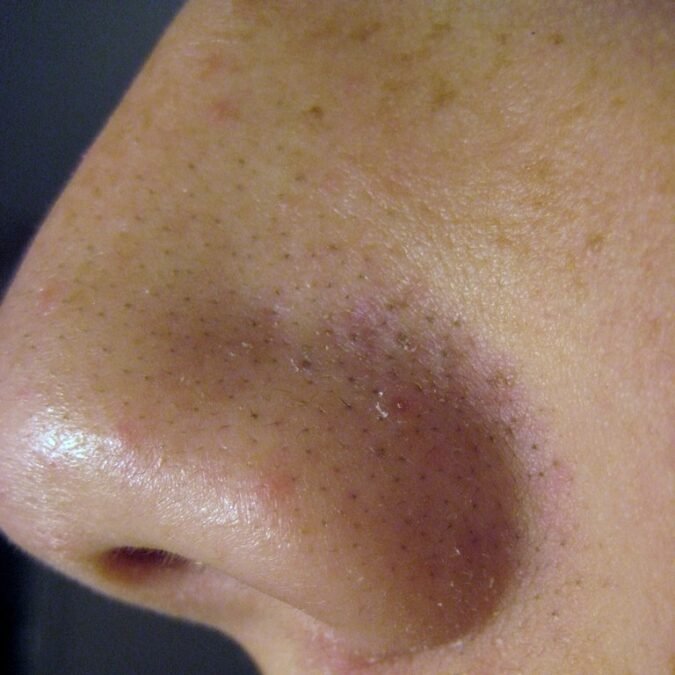
A blackhead is a type of acne known to dermatologists as an open comedone. It forms when a hair follicle, or pore, becomes clogged with sebum — the skin’s natural oil — and dead skin cells. Because the pore stays open at the surface, the trapped material is exposed to air, and it darkens through oxidation. That dark colour is not dirt, and it is not a sign that you are unclean. It is simply chemistry at work inside a clogged pore.
The nose is blackhead central for a few good reasons. First, the nose sits in the middle of the T-zone, the area across the forehead, nose, and chin where oil glands are most active. Second, the pores on the nose tend to be larger and more visible than pores elsewhere on the face, so even a small plug stands out. Third, oil production there is naturally high, which means the raw material for blackheads is always in generous supply. Hormonal changes during puberty, around menstrual cycles, and in conditions such as polycystic ovary syndrome can raise oil production further, and heavy or oily skincare and makeup products can add to the problem.
It helps to know that blackheads are not caused by poor hygiene, and understanding that fact is the first step in learning how to remove blackheads on nose without damaging your skin. Washing your face more often or scrubbing harder will not clear them, and over-washing can irritate the skin and make it look worse. The American Academy of Dermatology (AAD) is clear on this point: scrubbing blackheads will only make acne worse, because the dark plug is not dirt sitting on the surface.
How to Remove Blackheads on Nose: The Safe Starting Point
Before reaching for any product, take a breath and set realistic expectations. No cream, mask, or strip removes blackheads permanently in a single session. The AAD advises giving any new acne treatment six to eight weeks of consistent use before judging whether it works. That timeline matters, because the treatments that genuinely clear blackheads work gradually, by changing how skin cells behave inside the pore.
A sensible starting point has three parts: one proven active ingredient, gentle cleansing, and products labelled non-comedogenic, which means they are formulated not to clog pores. If you are researching how to remove blackheads on nose at home, this simple foundation is where the real results begin. Pick one active to begin with rather than stacking several new products at once. If you start everything together and your skin turns red or flaky, you will have no idea which product caused the trouble.
Patience is the quiet hero here. Many people give up after two weeks, switch to a different product, and start the clock all over again. Give your chosen treatment a fair run, use it exactly as directed, and keep the rest of your routine simple while you wait.
How to Remove Blackheads on Nose With Salicylic Acid
Salicylic acid is a beta hydroxy acid, often shortened to BHA, and it is one of the best-established over-the-counter options for blackheads. Unlike many exfoliants that work only on the surface, salicylic acid dissolves in oil, so it can slip inside the pore and loosen the plug of dead cells and sebum. The AAD specifically identifies salicylic acid as an ingredient that works well for blackheads and whiteheads, and the 2024 AAD acne guidelines give it a conditional recommendation.
In over-the-counter products in the United States, salicylic acid is typically found at strengths of 0.5% to 2%, in cleansers, toners, and leave-on gels. When people ask how to remove blackheads on nose with a single over-the-counter product, this is usually the ingredient dermatologists name first. A leave-on product, such as a gel or lotion, usually gives the ingredient more time to work than a cleanser that is rinsed off within a minute. If you are just starting out, a cleanser is the gentler introduction; you can move to a leave-on product once your skin has adjusted.
Here is how to use it wisely:
- Start once a day, or every other day if your skin is sensitive, and build up slowly.
- Apply it to clean, dry skin and follow with a light, non-comedogenic moisturiser.
- Do not combine it with other strong exfoliants or a retinoid on the same night at first — too many actives at once is a recipe for redness and peeling.
- Use sunscreen during the day, since exfoliated skin can be more sensitive to sunlight.
Mild dryness or a little tingling in the first week is common, but burning, swelling, or cracking means you should pause and scale back. If irritation keeps coming back, a lower strength or less frequent use is usually the answer.
Retinoids: The Long Game for Clearer Pores
If salicylic acid is the reliable workhorse, topical retinoids are the gold standard. The AAD’s 2024 acne guidelines make a strong recommendation for topical retinoids, and dermatologists consider them the first-line treatment for blackheads and whiteheads. Retinoids work differently from acids: they normalise the way skin cells shed inside the follicle, so dead cells are far less likely to clump together and form a plug in the first place.
Adapalene 0.1% gel is the best-known over-the-counter retinoid, sold in the United States without a prescription since the Food and Drug Administration approved it for over-the-counter use in 2016. Stronger retinoids, such as tretinoin and tazarotene, are available by prescription. For many people, adapalene is the sweet spot: effective, affordable, and easy to find.
A few practical rules make retinoids far easier to live with:
- Use a pea-sized amount for the whole face at night, not a thick layer on the nose alone.
- Expect some dryness or flaking in the first few weeks. This settling-in period is normal and usually passes.
- Moisturise well, and wear sunscreen every morning, because retinoids can make skin more sensitive to the sun.
- Do not use retinoids if you are pregnant, trying to conceive, or breastfeeding without first speaking to a doctor.
Retinoids reward patience more than any other blackhead treatment, and for many people the lasting answer to how to remove blackheads on nose for good is a retinoid used every night. Visible improvement often takes six to eight weeks, and the full benefit can take a few months. The payoff is real, though: fewer new blackheads forming, smoother skin, and pores that look smaller over time.
How to Remove Blackheads on Nose With Gentle Cleansing
Cleansing will not remove blackheads on its own, but it sets the stage for everything else to work, which is why any honest guide to how to remove blackheads on nose starts with washing well. A gentle cleanser removes sunscreen, makeup, sweat, and excess surface oil without disturbing the skin barrier. The AAD recommends washing with a gentle, non-abrasive cleanser, using lukewarm water and your fingertips, and generally limiting face washing to twice a day and after heavy sweating.
That sounds almost too simple, yet it is where many routines go wrong. Rough washcloths, cleansing brushes, and gritty scrubs feel as though they are doing more, but they mostly create tiny irritation that can trigger more oil production and more breakouts. Your fingertips and lukewarm water are genuinely enough.
A good cleansing routine for a blackhead-prone nose looks like this:
- Wash morning and evening, and after exercise or heavy sweating.
- Use a mild cleanser suited to your skin type, and rinse with lukewarm water.
- Pat dry with a clean towel rather than rubbing.
- Remove makeup fully every night before bed, since leftover makeup can contribute to clogged pores.
Think of cleansing as housekeeping, not heavy lifting. It keeps the surface clear so your active ingredients can get to work inside the pore, where the real problem lives.
Clay Masks and Other Weekly Helpers
Clay masks, usually made with kaolin or bentonite clay, absorb surface oil and can make the nose look temporarily clearer and less shiny. If you are learning how to remove blackheads on nose as part of a weekly routine, a clay mask used once or twice a week is a reasonable supporting step. Apply the mask to the oilier zones, usually the nose and chin, leave it on for the time stated on the label, and moisturise afterwards. Do not let the mask dry until it cracks, since that can leave skin feeling tight and stripped.
Beyond clay, a few other gentle helpers can support your routine:
- Niacinamide: This form of vitamin B3 can help balance oil production and calm redness, and it pairs well with most other ingredients.
- Azelaic acid: Available over the counter at lower strengths, it can help with clogged pores and uneven tone, and it is often well tolerated by sensitive skin.
- Oil-free moisturiser: Skipping moisturiser is a common mistake. Dehydrated skin can overproduce oil, so a light, non-comedogenic moisturiser actually helps keep blackheads at bay.
- Daily sunscreen: A lightweight, oil-free sunscreen protects the skin barrier and prevents the dark marks that acne can leave behind.
None of these will clear blackheads on their own, and that is fine. They are supporting players, and a routine built on one proven active plus good basics will beat a shelf full of trendy products every time.
Pore Strips: The Honest Pros and Cons
Pore strips are the most satisfying blackhead product on the market, and also one of the most misunderstood. You stick one on a damp nose, wait for it to dry, peel it off, and admire the forest of tiny plugs stuck to the strip. It feels like progress, and in a narrow sense it is: the strip does lift out the top of some plugs.
The catch is that pore strips only clear the surface, which is the main reason they are a poor answer to how to remove blackheads on nose in the long term. They do nothing to stop new plugs forming, so the dots usually return within days. They can also irritate the skin, pull off the top layer of healthy skin cells, and trigger redness, especially on sensitive or sunburned skin. Dermatologists do not recommend them as a treatment plan, though an occasional strip on healthy, non-irritated skin is unlikely to cause lasting harm.
Here is the honest balance:
- Pros: Quick, visible result; easy to use; inexpensive.
- Cons: Temporary only; does not prevent new blackheads; can irritate or damage sensitive skin; may enlarge the look of pores over time if used too often.
If you enjoy pore strips, use them sparingly — no more than once a week — and never on broken, sunburned, or irritated skin, and never as a substitute for salicylic acid or a retinoid. The strip is a party trick; the real work happens quietly, night after night, with the ingredients that change how your pores behave.
Blackheads vs Sebaceous Filaments: Know the Difference
Here is a plot twist that surprises many people: a large share of the tiny grey dots on the nose are not blackheads at all. They are sebaceous filaments, normal structures that help sebum travel from the oil gland to the skin’s surface. They usually appear as small, evenly spaced greyish or yellowish dots, and they are part of healthy skin, not a flaw to be fixed.
Telling them apart saves a lot of wasted effort and skin damage:
- Blackheads are usually darker, larger, and more raised, and they can often be cleared with treatment.
- Sebaceous filaments are lighter grey or tan, sit flat, appear in a fairly even pattern, and refill within days even after extraction.
Sebaceous filaments cannot be removed permanently, and trying to squeeze them out only inflames the pore. The good news is that the same routine that helps blackheads — salicylic acid, retinoids, gentle cleansing — can make filaments look less noticeable, so if you are studying how to remove blackheads on nose, the same steps still help. If the dots on your nose are soft, grey, and evenly spaced, you may be looking at filaments, and a gentler goal — less visible, not gone forever — is the realistic one.
Mistakes to Avoid When You Try to Remove Blackheads on Nose
Knowing what not to do is every bit as important as knowing what works, and anyone learning how to remove blackheads on nose should memorise this list before trying anything new. Some of the most popular blackhead advice online is also the most damaging, and the AAD has warned against several of these habits directly.
- Squeezing and picking: This is the big one. Squeezing can push the plug deeper into the skin, spread bacteria, and cause infection or permanent scarring. The AAD warns that picking, popping, or squeezing acne raises the risk of scars, and the dark spots left behind can last far longer than the blackhead itself.
- Harsh scrubs and brushes: The dark colour is not dirt, so scrubbing cannot lift it out. Abrasive scrubs damage the skin barrier and can make breakouts worse.
- Toothpaste: The AAD specifically advises against toothpaste as an acne treatment. Ingredients such as baking soda, flavouring, and colouring can irritate the skin, and toothpaste is not a clinically established blackhead treatment.
- Lemon juice, baking soda, and other kitchen remedies: These are often too acidic or too alkaline for facial skin, and they can cause irritation, dryness, or even chemical burns.
- DIY extraction tools: Metal extractors bought online can bruise the skin and push bacteria deeper if used without sterile technique and proper training. Extraction belongs with a professional.
- Using too many actives at once: Stacking a strong acid, a retinoid, and a scrub in the same week is a fast track to a red, peeling nose. Introduce one product at a time and give it weeks, not days.
If a method sounds too good to be true, or promises instant results, it almost certainly is. Slow and steady is not just safer — it is genuinely faster in the long run.
Professional Treatments That Really Work
When home care is not enough, a dermatologist has several stronger options, and they are worth knowing about before you spend more money on products that are not working. If your own research into how to remove blackheads on nose has stalled, these professional treatments are the logical next step.
Professional extraction is the safest way to remove stubborn blackheads. A dermatologist or licensed esthetician uses sterile instruments and proper technique to clear the plug without damaging the surrounding skin. It is usually offered when other treatment has not worked, and it works best alongside a home routine, since blackheads can return afterwards if the pore keeps clogging.
Chemical peels use a controlled acid solution, often based on salicylic or glycolic acid, to exfoliate the skin more deeply than home products can. A series of light peels can reduce blackheads and improve skin texture, though some redness and peeling for a few days is normal.
Microdermabrasion is a gentle in-office exfoliation that uses fine crystals or a diamond-tipped wand to remove the outer layer of dead skin. It can make pores look clearer and help other treatments absorb better, and it usually involves little to no downtime.
Prescription retinoids such as tretinoin or tazarotene are stronger than over-the-counter adapalene and can be prescribed when blackheads are widespread or stubborn. Your dermatologist may also consider other prescription options if blackheads come with inflamed or painful breakouts.
A professional treatment is not a magic reset button. Even after an in-office procedure, you will still need a daily routine to keep new blackheads from forming. Think of it as a deep clean followed by regular housekeeping, not a one-time fix.
Methods Compared at a Glance
Before choosing your approach, here is how the main options stack up side by side. Cost and gentleness vary by brand and skin type, but the pattern is consistent: the gentlest, cheapest options take the longest, while the fastest results usually come from a professional.
| Method | Gentleness | Typical cost | Results |
|---|---|---|---|
| Salicylic acid (0.5–2%) | Good, mild dryness possible | Low | Gradual clearing over 6–8 weeks |
| Adapalene 0.1% retinoid | Moderate, some flaking at first | Low | Strongest long-term prevention |
| Clay mask | Good if used weekly | Low | Temporary oil control, fresher look |
| Pore strips | Can irritate sensitive skin | Very low | Instant but short-lived surface clearing |
| Professional extraction | Done safely by a professional | Moderate to high | Immediate clearing of stubborn plugs |
How to Remove Blackheads on Nose and Keep Them Away: A Prevention Routine
Clearing blackheads is only half the job; keeping them away is where most people stumble, and that is the real test of how to remove blackheads on nose successfully. Prevention is less exciting than a dramatic before-and-after photo, but it is the part that actually changes your skin over time.
A simple prevention routine has five habits:
- Cleanse gently twice a day, morning and night, and always remove makeup before bed.
- Use one proven active consistently, such as a nightly retinoid or a salicylic acid product, and give it at least six to eight weeks.
- Choose non-comedogenic products for your moisturiser, sunscreen, and makeup, and check labels when you switch brands.
- Moisturise and protect: A light moisturiser keeps the skin barrier healthy, and daily sunscreen prevents dark marks and sun damage.
- Keep your hands off your face: Touching and picking transfer bacteria and oil, and they irritate pores that are already prone to clogging.
Lifestyle habits play a supporting role too. Changing pillowcases regularly, cleaning your phone screen, and keeping hair products away from the forehead can all reduce the oil and residue that reach the nose. None of these is a cure on its own, but together they tip the balance in your favour.
Skin-Type Notes: Oily, Dry, Sensitive and Combination Skin
Blackheads do not care about your skin type, but your treatment plan should, and the safest way to learn how to remove blackheads on nose for your own skin is to match the product to the skin you have. The same active ingredient can be a blessing for one person and a burden for another, so a little tailoring goes a long way.
Oily Skin
If your nose shines by midday, you are in the classic blackhead group. Oily skin usually tolerates salicylic acid well, and a gel or light lotion formula suits you better than a heavy cream. A clay mask once or twice a week can help with shine, and a mattifying, oil-free sunscreen is your friend. Resist the urge to over-wash, though — stripping oil aggressively often triggers the skin to produce even more.
Dry Skin
Dry skin can still develop blackheads, especially on the nose, and harsh treatments can make dryness worse. Start with a lower strength salicylic acid, use it less often, and pair it with a richer moisturiser. A gentle cream cleanser may suit you better than a foaming one, and a retinoid should be introduced slowly, perhaps every third night at first, with plenty of moisturiser as a buffer.
Sensitive Skin
Sensitive skin needs the softest approach of all. Patch-test any new product on a small area first, introduce one active at a time, and consider a salicylic acid cleanser rather than a leave-on product, since it spends less time on the skin. Azelaic acid and niacinamide are often well tolerated, and a dermatologist can help you find a prescription-strength option that does not set your skin off.
Combination Skin
Combination skin — an oily T-zone with drier cheeks — is extremely common, and it responds well to targeted care. You can apply your blackhead treatment mainly to the nose and chin, while using a gentler routine on the cheeks. This “zone” approach lets you treat the problem area firmly without drying out the rest of your face.
When to See a Dermatologist
Most blackheads are a cosmetic concern that home care can handle, but some situations call for professional help, and knowing when to stop researching how to remove blackheads on nose online and book a visit is part of good skin care. Book an appointment if any of the following sound familiar:
- Blackheads are still there after six to eight weeks of consistent treatment with a proven active.
- Blackheads come with many red or painful pimples, deep lumps, or scarring.
- A single large blackhead-like bump keeps coming back in the same spot, which may be a different condition that needs checking.
- Over-the-counter products keep irritating your skin, or you are unsure which ones are safe for you.
- You are pregnant, trying to conceive, or breastfeeding and want to know which treatments are safe.
A dermatologist can also confirm whether those dots on your nose are blackheads or sebaceous filaments, prescribe a stronger retinoid, or perform a professional extraction safely. There is no prize for struggling alone when expert help is one appointment away.
Your Simple Weekly Plan for a Clearer Nose
Putting it all together, here is a straightforward weekly rhythm that works for most people. It is simple on purpose — the best routine is the one you will actually stick to.
| Day | Morning | Evening |
|---|---|---|
| Every day | Gentle cleanser, light moisturiser, oil-free sunscreen | Gentle cleanser, active treatment, moisturiser |
| Monday | As above | Salicylic acid product |
| Tuesday | As above | Adapalene (pea-sized, whole face) |
| Wednesday | As above | Salicylic acid product |
| Thursday | As above | Adapalene |
| Friday | As above | Salicylic acid product |
| Saturday | As above | Clay mask once a week, then moisturiser |
| Sunday | As above | Rest night — cleanser and moisturiser only |
A few notes on this plan: do not use salicylic acid and a retinoid on the same night until your skin is fully used to both, and always give new products a few weeks before changing anything. If your skin turns red, flaky, or sore, drop back to cleansing and moisturising for a few days, then reintroduce actives one at a time. For authoritative, dermatologist-reviewed guidance on acne treatments, see the American Academy of Dermatology’s acne guidelines, summarised by the American Academy of Family Physicians at aafp.org.
Final Thoughts: How to Remove Blackheads on Nose the Smart Way
Learning how to remove blackheads on nose the smart way comes down to a handful of simple truths: the dark dots are oxidised oil and dead skin, not dirt; gentle, proven ingredients beat harsh scrubs and squeezing every time; and patience is part of the treatment. A routine built on gentle cleansing, one proven active such as salicylic acid or adapalene, non-comedogenic products, and daily sunscreen will do more for your nose in two months than a drawer full of quick fixes ever could.
If you take one idea from this guide, let it be this: treat your skin kindly and give it time. Blackheads did not appear overnight, and they will not vanish overnight either — but with the right routine, used consistently, they will fade, and far fewer new ones will take their place. And if home care is not getting you there after a couple of months, a dermatologist can help you take the next step with confidence.
This article is for general information only and is not a substitute for advice from your dermatologist. If you have a skin concern, speak to a qualified healthcare professional.
More practical how-to guides from SeeBlogHub: learn how to remove coffee stains from fabric and surfaces, and how to clean white shoes without ruining them.