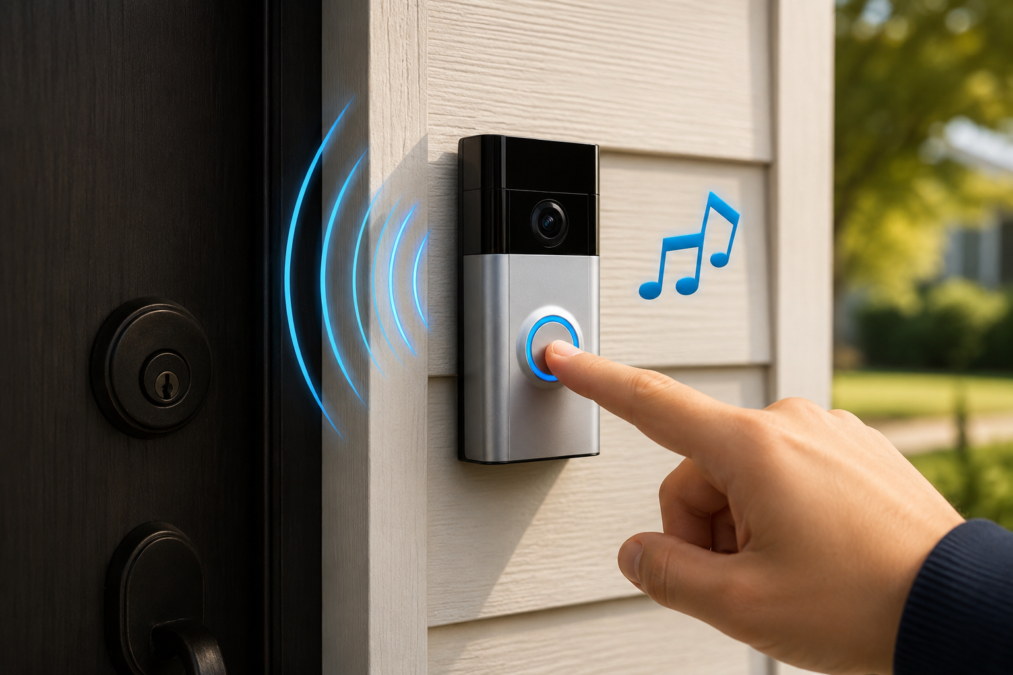
A doorbell sound is more than just a simple noise that tells you someone is standing outside. It can be a friendly welcome, a useful alert, or an important part of a home’s security system. From the classic “ding-dong” heard in traditional houses to modern wireless chimes, musical tones, smart alerts, and customized recordings, doorbells have changed greatly over time.
Today, homeowners can choose from many different types of doorbell sound options. Some people prefer a soft and pleasant tone, while others want a loud chime that can be heard throughout a large house. Smart doorbells can even send sound and phone notifications at the same time.
This guide explains how doorbell sounds work, the different types available, how to choose the right sound, common problems, and ways to make a doorbell more useful and enjoyable.
What Is a doorbell sound?
A doorbell sound is the audible signal produced when someone presses a doorbell button or when a smart doorbell detects an event. Its main purpose is simple: it tells people inside the property that someone is at the door.
Traditional doorbells usually make a mechanical or electronic chime. Older models often use a wired electrical system, while newer systems may use wireless communication. Smart doorbells can provide a much wider range of sounds through a connected indoor chime, smartphone, tablet, or smart home device.
A good doorbell sound should be easy to recognize without being unpleasant. It should also be loud enough for the size of the home. After all, a beautiful chime isn’t very helpful if nobody can hear it from another room.
Why doorbell sound Matters in Everyday Life
A reliable doorbell sound helps improve communication between the outside and inside of a home. When visitors arrive, they don’t need to knock repeatedly or call the homeowner. A simple press of the button can provide an immediate signal.
Doorbells can also be useful for deliveries, family members, guests, and service workers. In busy homes, the sound can save time because people immediately know when someone is waiting outside.
A well-designed doorbell sound can provide:
- A clear signal that someone is at the entrance
- A pleasant experience for visitors
- Better awareness of deliveries
- Extra convenience for homeowners
- A useful alert for smart-home systems
- Different sound choices for different occasions
For families, choosing a comfortable sound is particularly important because the doorbell may be heard many times throughout the day.
Types of doorbell sound
There isn’t just one type of doorbell sound. Different doorbells use different technologies and sound systems, so the experience can vary considerably.
Traditional Chime Sounds
The classic mechanical chime is one of the most familiar choices. It often produces a simple “ding-dong” or similar two-tone sound.
These sounds are popular because they’re easy to recognize and generally don’t feel distracting. They also have a timeless quality that works well in traditional homes.
Electronic Doorbell Sounds
Electronic doorbells use speakers or digital components to create sound. They can offer more choices than mechanical systems.
Depending on the model, an electronic doorbell may include:
- Classic chimes
- Bells
- Melodies
- Short musical tones
- Nature sounds
- Seasonal sounds
- Custom audio
This flexibility makes electronic doorbells attractive to homeowners who want something different from the traditional chime.
Wireless Doorbell Sounds
Wireless doorbells communicate between the outdoor button and an indoor receiver. Because there doesn’t need to be a traditional wire running between the two components, installation can be easier.
The indoor receiver usually contains a speaker and allows the user to select a doorbell sound. Some models also let users adjust volume or add extra receivers.
Smart Doorbell Sounds
Smart doorbells connect to a home network and often work with mobile apps. When someone presses the button, the homeowner may receive both an indoor chime and a phone notification.
Some smart systems offer customizable sounds, while others allow the user to connect the doorbell to compatible smart-home equipment.
How a doorbell sound Works
Understanding how a doorbell sound works can help when selecting or troubleshooting a doorbell.
In a basic wired system, pressing the doorbell button completes an electrical circuit. The electrical signal reaches the chime, causing its mechanism or speaker to produce sound.
Wireless systems work differently. Pressing the outdoor button sends a wireless signal to an indoor receiver. The receiver then plays the selected sound.
Smart doorbells add another layer. The button can communicate with a connected system, which may then send information to:
- An indoor chime
- A smartphone
- A tablet
- A smart speaker
- Other compatible devices
This means a modern doorbell can be both an alert system and a communication tool.
How to Choose the Best doorbell sound
Choosing the right doorbell sound depends on your home, personal preferences, and the people who live there.
Start by thinking about volume. A small apartment doesn’t necessarily need an extremely loud chime. A large house, however, may require a stronger sound or multiple indoor receivers.
Next, consider the character of the sound. A short, clear chime may be better for someone who prefers a quiet environment. Someone else might enjoy a melody or a more distinctive tone.
Important factors include:
| Feature | Why It Matters |
|---|---|
| Volume | Helps ensure the chime can be heard |
| Sound quality | Makes the alert pleasant and clear |
| Tone selection | Allows personal customization |
| Number of sounds | Provides more flexibility |
| Wireless range | Important for larger homes |
| Smart compatibility | Useful for connected homes |
| Adjustable volume | Helps control noise |
| Indoor receivers | Can improve coverage |
| Reliability | Ensures visitors aren’t missed |
| Installation | Determines setup difficulty |
A good doorbell sound should match both the home’s physical layout and the household’s lifestyle.
Popular Styles of doorbell sound
Different sound styles create different moods. The best choice depends on what you want your entrance to feel like.
Classic Ding-Dong
The classic ding-dong remains popular because it’s familiar and easy to understand. It has a clean, simple rhythm and usually doesn’t become annoying.
Soft Bell
A soft bell can be suitable for apartments, offices, bedrooms, or quiet homes. It provides an alert without creating a sudden, harsh noise.
Musical Chime
Musical sounds can make a doorbell feel more personal. Some electronic systems offer short melodies that can be changed according to preference.
Nature Sounds
Certain doorbells offer sounds inspired by birds, wind chimes, or other natural effects. These can create a relaxed feeling around the home.
Seasonal Sounds
Some modern doorbells provide special sounds for holidays or events. This can be a fun feature for families, although a classic sound may be preferable for everyday use.
doorbell sound and Home Accessibility
A doorbell sound is important, but sound alone isn’t always enough for every household. People who don’t hear well may benefit from doorbells that provide additional visual or vibrating alerts.
Modern systems can sometimes provide:
- Smartphone notifications
- Flashing lights
- Vibrating receivers
- Smartwatch alerts
- Multiple indoor chimes
These features can make a doorbell more accessible and dependable.
It’s also useful to position indoor receivers where household members spend time. A doorbell that can be heard only near the front entrance isn’t ideal if people usually work or relax elsewhere.
How Loud Should a doorbell sound Be?
The ideal volume depends on the size and layout of the property.
A small apartment with thin walls may require a relatively low setting. A large home with several floors may need a louder chime or additional receivers.
However, louder isn’t always better. An excessively loud doorbell sound can be startling, especially for children, older adults, pets, or people who prefer a calm environment.
A practical approach is to begin with a moderate volume. Walk into different areas of the home and listen. If the sound can’t be heard clearly, increase the volume or consider another receiver.
Why Your doorbell sound May Stop Working
Sometimes a doorbell button works but no sound is produced. In other cases, the chime may be very quiet, distorted, or inconsistent.
Possible causes include:
- Dead or weak batteries
- Power problems
- A damaged button
- Loose wiring
- Wireless interference
- Receiver placement
- Speaker problems
- Incorrect settings
- Software issues on smart models
For a wireless doorbell, checking the batteries is often a sensible first step. For a smart doorbell, checking the app connection and device settings can also help.
If the system is wired into household electricity, electrical repairs should be handled carefully. When you’re unsure about wiring, it’s safer to contact a qualified professional rather than experimenting with live electrical connections.
How to Make a doorbell sound Louder
If the doorbell sound isn’t loud enough, there are several practical solutions.
First, check whether the doorbell has a volume control. Many electronic and wireless models allow volume adjustment through physical buttons or an app.
Second, consider the location of the indoor chime. A receiver hidden behind furniture or placed inside a closed cabinet may sound quieter than expected.
Third, you might add another compatible receiver. One chime can be placed upstairs and another downstairs, allowing the alert to reach more parts of the home.
For smart doorbells, phone notifications can also provide another way to know when someone is at the door.
How to Make a doorbell sound Quieter
Not everyone wants a loud chime. If your current doorbell sound is too strong, reducing the volume is usually the easiest solution.
Some systems provide several volume levels. Others offer different tones, allowing you to select a softer option.
A gentle sound may be particularly helpful during:
- Nighttime
- Baby nap times
- Work or study sessions
- Quiet evenings
- Homes with noise-sensitive pets
A doorbell should alert you without unnecessarily disturbing everyone in the house.
Customizing Your doorbell sound
Customization is one of the most interesting features of modern electronic and smart doorbells.
Depending on the model, you may be able to select from a built-in sound library. Some systems may offer additional options through their mobile applications.
When customizing a doorbell sound, keep these points in mind:
- Choose something recognizable.
- Avoid sounds that are too similar to phone alerts.
- Make sure the sound is loud enough.
- Select a tone that won’t become irritating.
- Consider other people living in the home.
- Test the sound from different rooms.
A sound might seem great when tested next to the door, but it could be difficult to hear from a bedroom or upstairs office.
doorbell sound for Smart Homes
Smart-home technology has changed what a doorbell sound can do. A smart doorbell can connect the front entrance to other parts of a digital home.
For example, a visitor might press the button and trigger an indoor chime while the homeowner receives a phone notification. Some systems can also show who is at the door through a connected camera.
This can be especially useful when you’re:
- Working in another room
- Outside the house
- Away from home
- Expecting a delivery
- Unable to hear the indoor chime
The doorbell becomes more than a sound-producing device. It becomes part of a larger home communication system.
Choosing a doorbell sound for Different Homes
Different properties have different needs.
Apartments
Apartments often benefit from compact doorbells with moderate volume. A soft but clear doorbell sound can be enough because the living area is usually smaller.
Large Houses
Large houses may require multiple receivers or a powerful chime. Wireless range should also be considered if the doorbell button and indoor receiver are far apart.
Offices
Offices generally benefit from short, professional chimes. A sound should be noticeable without disturbing workers.
Shops
Retail stores may need a distinctive sound that staff can hear over background noise. The sound should be clear rather than excessively loud.
Smart Homes
Smart homes can benefit from systems that offer app notifications, customizable sounds, multiple receivers, and integration with other compatible devices.
doorbell sound and Privacy
Modern smart doorbells can include cameras and microphones, so privacy deserves attention.
While a traditional doorbell mainly produces a doorbell sound, a smart model may collect or transmit information through its connected services. Homeowners should understand the privacy settings of their device and use strong account security.
Good practices include:
- Use a strong, unique password.
- Keep device software updated.
- Review privacy settings.
- Understand notification settings.
- Share access only with trusted people.
- Check what information the doorbell stores.
A doorbell can improve convenience and security, but responsible setup is equally important.
Maintaining Your doorbell sound System
Regular maintenance can keep a doorbell sound system working reliably.
For battery-powered devices, replace or recharge batteries when needed. Keep the outdoor button clean and make sure it isn’t blocked by dirt or debris.
For wireless systems, avoid placing the indoor receiver in locations where walls or large objects may weaken the signal. If the sound becomes distorted, check the speaker and settings.
Smart doorbells should also be kept updated through their official software or app. Updates can improve performance, security, and compatibility.
Common doorbell sound Problems and Solutions
| Problem | Possible Cause | Practical Solution |
|---|---|---|
| No sound | Dead battery or power issue | Check power source |
| Very quiet chime | Low volume | Increase volume |
| Sound cuts out | Weak wireless signal | Move receiver |
| Distorted sound | Speaker issue | Inspect or replace device |
| Button works inconsistently | Button problem | Check or replace button |
| Smart alert missing | Connection issue | Check network and app |
| Doorbell works sometimes | Battery or signal issue | Test both |
| Chime isn’t heard upstairs | Poor coverage | Add another receiver |
These basic checks can solve many everyday problems. However, electrical faults and complicated installation issues should be handled by an appropriately qualified technician.
The Role of Sound in Doorbell Design
Sound design may seem like a small part of a doorbell, but it strongly affects the user experience.
A good chime should have enough volume to attract attention while remaining comfortable. It should also have a clear rhythm so that people instantly recognize it.
This is why the traditional ding-dong remains effective. It’s short, distinctive, and easy to understand.
Modern manufacturers can build on this basic idea by adding digital tones, volume controls, multiple sound choices, and connected notifications.
Tips for Getting the Best doorbell sound Experience
If you want your doorbell to work well every day, a few simple practices can make a noticeable difference.
- Choose a sound that is easy to recognize.
- Test the volume in several rooms.
- Avoid setting the volume unnecessarily high.
- Replace weak batteries promptly.
- Keep outdoor components clean.
- Check wireless range during installation.
- Use additional receivers for large homes.
- Keep smart devices updated.
- Review privacy and account settings.
- Choose accessibility features when needed.
These steps don’t require complicated technical knowledge, and they can make your doorbell much more useful.
Frequently Asked Questions About doorbell sound
What is the most common doorbell sound?
The classic ding-dong is one of the most recognizable doorbell sounds. Its popularity comes from its simple two-tone pattern and clear meaning.
Can I change my doorbell sound?
Many electronic and smart doorbells allow users to change the chime. Traditional mechanical systems generally offer fewer customization options.
Why is my doorbell sound so quiet?
A low volume setting, weak battery, receiver placement, or speaker problem may cause a quiet chime. Check the simplest causes first.
Can a doorbell have different sounds?
Yes. Many electronic and smart systems offer multiple tones, melodies, or seasonal sounds.
Can I make my doorbell sound louder?
If the device supports volume control, increasing the volume is the easiest solution. Adding another compatible receiver can also improve coverage.
Does a smart doorbell need an indoor chime?
Not always. Some smart doorbells can send notifications directly to a phone or compatible connected device. However, an indoor chime can be useful when you don’t want to depend only on a smartphone.
Why does my wireless doorbell sound stop working?
A weak battery, wireless interference, distance, or a problem with the receiver may be responsible. Check the battery and receiver position first.
Is a loud doorbell better?
Not necessarily. The best volume is one that can be heard clearly without being uncomfortable or disturbing people unnecessarily.
Final Thoughts on doorbell sound
A doorbell sound may seem like a small feature, but it plays an important role in how people interact with a home, apartment, office, or shop. The right sound can be clear, pleasant, reliable, and easy to recognize.
Traditional chimes remain excellent for people who prefer simplicity, while electronic and smart doorbells offer greater flexibility. With adjustable volume, multiple tones, wireless receivers, smartphone alerts, and accessibility features, today’s systems can meet a wide range of needs.
Ultimately, the best doorbell sound is the one that fits your space and lifestyle. Choose a tone that you enjoy hearing, make sure it can be heard where you need it, maintain the device properly, and use smart features responsibly. With the right setup, a doorbell sound can provide both convenience and a welcoming touch every time someone arrives.
Stay in touch to get more updates & news on See Blog Hub!